

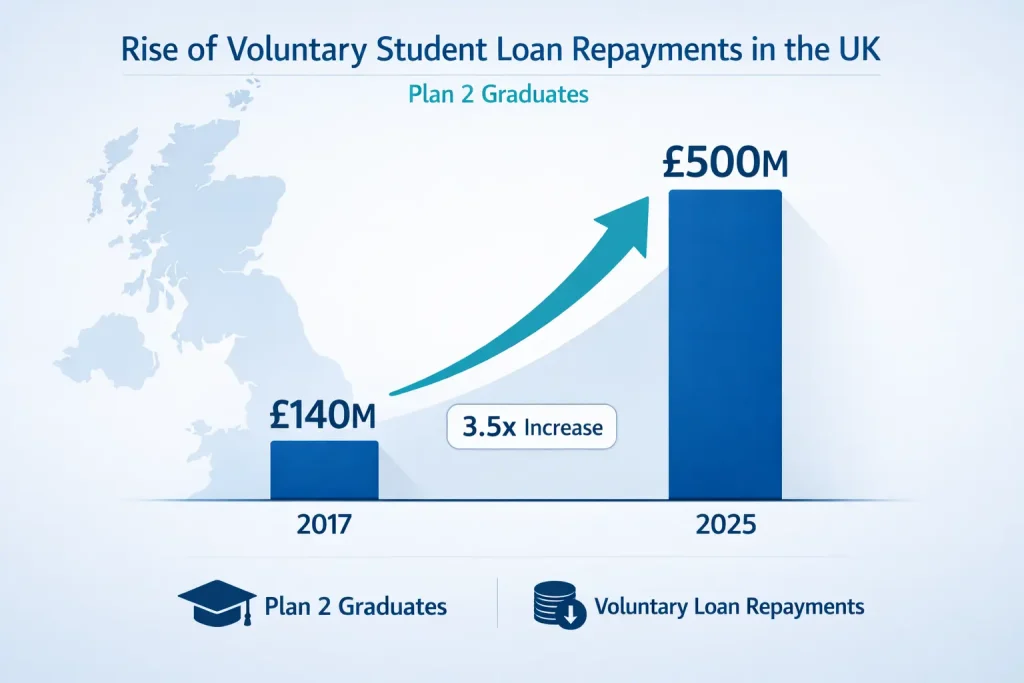
More UK graduates are choosing to pay extra towards their student loans, particularly those on Plan 2. Between 2017 and 2025, voluntary repayments more than tripled — rising from around £140 million to nearly £500 million — as students and graduates tried to limit growing debt and interest. With repayment thresholds frozen and living costs still high, this trend is becoming increasingly relevant for students planning their finances beyond university.
What’s Happening With Student Loans in the UK?
In 2026, debates about voluntary student loans rise in UK are gaining traction alongside major changes in the government’s student loan repayment rules. One of the most controversial reforms affects Plan 2 student loans — the repayment category used by most undergraduates who started their courses between 2012 and 2023.
According to leading financial commentator Martin Lewis, the UK government is moving to freeze the repayment threshold for Plan 2 loans, a change that could leave many graduates paying more over time. This development has sparked significant criticism from experts and student organisations alike — and it has implications for how graduates think about borrowing, repayments, and voluntary financial planning.
What Are Plan 2 Student Loans?
Most UK undergraduates who started university after September 2012 take out a Plan 2 student loan to cover tuition fees and maintenance costs. Repayments only begin once a graduate earns above a certain income threshold — currently £29,385 per year (from April 2026). The amount repaid is 9% of income above that threshold.
Under normal circumstances, this threshold would rise each year with inflation or wages. But the new government plan is to freeze it at the 2026 level until 2030, meaning more graduates will begin repaying sooner and pay more of their income overall.
Why Is This Leading to a Rise in Voluntary Repayments?
Repay More or Sooner Than Expected
A threshold freeze means as wages rise with inflation, more people will cross the repayment boundary sooner and pay higher monthly contributions than they would if the threshold kept pace with earnings.
This dynamic is sometimes referred to as “fiscal drag” — essentially, the system pulls more money from graduates as their nominal income increases even if their real income does not.
Strategic Voluntary Repayments
Faced with this shift, some graduates are increasingly choosing to voluntarily repay more of their student loan early — even if they aren’t legally required to do so yet. They hope to reduce the total interest they will owe over time.
This behaviour — repaying more than the minimum required — contributes to the idea of a “voluntary student loans rise” because such extra repayments are not mandated but chosen. They are a response to policy and inflation expectations.
Who Is Most Impacted?

Students Earning Just Above the Threshold
Graduates earning slightly above £29,385 will start paying repayments earlier than they would if the threshold had continued to rise with earnings. Even modest income increases can now trigger repayment sooner.
Middle-Income Graduates
Reports show that lower-middle and middle-income graduates are likely to be hit hardest by the combined effect of the threshold freeze and rising living costs — because they are not wealthy enough to absorb the extra payment burden easily, yet earn enough to be above the threshold.
Those Considering Voluntary Repayment Strategy
Some graduates — especially those on stable incomes — are considering voluntary pre-payments to reduce future interest accumulation. While this might save money in the long run, it’s not risk-free, as funds used for pre-payment are locked into the loan system and can’t be used for other financial priorities.
How Does This Relate to Your Loan Balance?
Even if you are actively repaying your student loan, interest can still accrue faster than you reduce the outstanding balance, due to how UK student loan interest is calculated.
Under Plan 2:
- Interest is linked to inflation (RPI) plus up to 3%, meaning actual interest rates can range from about 3.2% to over 6%.
- This can mean that, in real terms, the debt can grow despite repayments, especially when income increases but thresholds don’t. The Guardian reports many graduates have seen their debt rise even after several years of payments, due to interest exceeding repayment reductions.
This dynamic is one reason some borrowers choose to make extra voluntary payments early — in hope of capping future interest.
Practical Considerations for 2026
🔹 Should You Make Voluntary Repayments?
Voluntary repayments can reduce long-term interest costs, but consider:
- You lose liquidity — you can’t use that money elsewhere.
- If your earnings are low, voluntary repayment might not be financially sensible.
- Some borrowers may never repay in full anyway, as UK student loans are written off after 30 years under Plan 2 rules. (gov.uk)
🔹 Budgeting and Career Planning
Graduates need to:
- Track income carefully each tax year
- Anticipate how inflation adjustments will affect take-home pay
- Consider career and salary progression in financial planning
🔹 Political and Policy Outlook
The student loan repayment system is increasingly a politically contested issue in the UK. Critics — like Martin Lewis — label the threshold freeze as unfair or “not moral”, arguing it places undue burden on young workers.
So What Does “Voluntary Student Loans Rise in UK 2026” Really Mean?
It does not solely mean more private borrowings in the traditional sense (like bank loans). In the UK context in 2026, it increasingly refers to graduates choosing to make higher repayments than required, or earlier than expected, because they anticipate a heavier debt burden under new repayment rules.
This rise in voluntary actions — whether through extra payments or more aggressive personal financial planning — is a side effect of policy changes (like the repayment threshold freeze) and economic pressures (such as the cost of living and inflation).
Key Takeaways for UK Graduates
✅ Threshold Freeze Means More Repayments — Even modest wage increases now trigger repayments sooner.
✅ Voluntary Repayments Are Growing — Graduates choose to pay extra to limit interest growth over decades.
✅ Interest Still Accrues Fast — High RPI-linked rates mean debt can grow despite payments.
✅ Write-Off After 30 Years — Long-term borrowers may never repay in full, but voluntary repayments can still reduce total debt. (gov.uk)
✅ Budgeting Is Essential — Think carefully before committing to extra payments.
Conclusion
The voluntary student loans rise in UK 2026 isn’t just a catchy phrase — it reflects real responses from borrowers to policy changes and financial pressures. With the Plan 2 repayment threshold frozen until 2030 and inflation still elevated, many graduates are recalibrating how they manage their student debt.
Understanding these trends — and how voluntary repayments fit into your personal financial strategy — will be crucial for anyone navigating the UK student loan system in the years ahead.