
Understanding the hidden costs of living in the UK 2026 is essential for anyone trying to manage a realistic monthly budget. While rent and groceries are obvious, several ‘invisible’ expenses can catch you off guard. You’ve checked the rent, calculated the Council Tax, and negotiated your salary. But in 2026, the UK’s true cost of living often hides in the small print. From mandatory healthcare fees to a tax just for having a television, “hidden” expenses can easily add £2,000 to £5,000 to your annual budget. If you are moving to the UK or renewing your visa this year, these are the 5 costs you cannot afford to ignore.
Finding a job is great, but calculating the hidden costs of living in the UK 2026 is what actually determines your lifestyle
Top 5 Hidden Costs of Living in the UK 2026
1. The NHS Immigration Health Surcharge (IHS) – The Big One
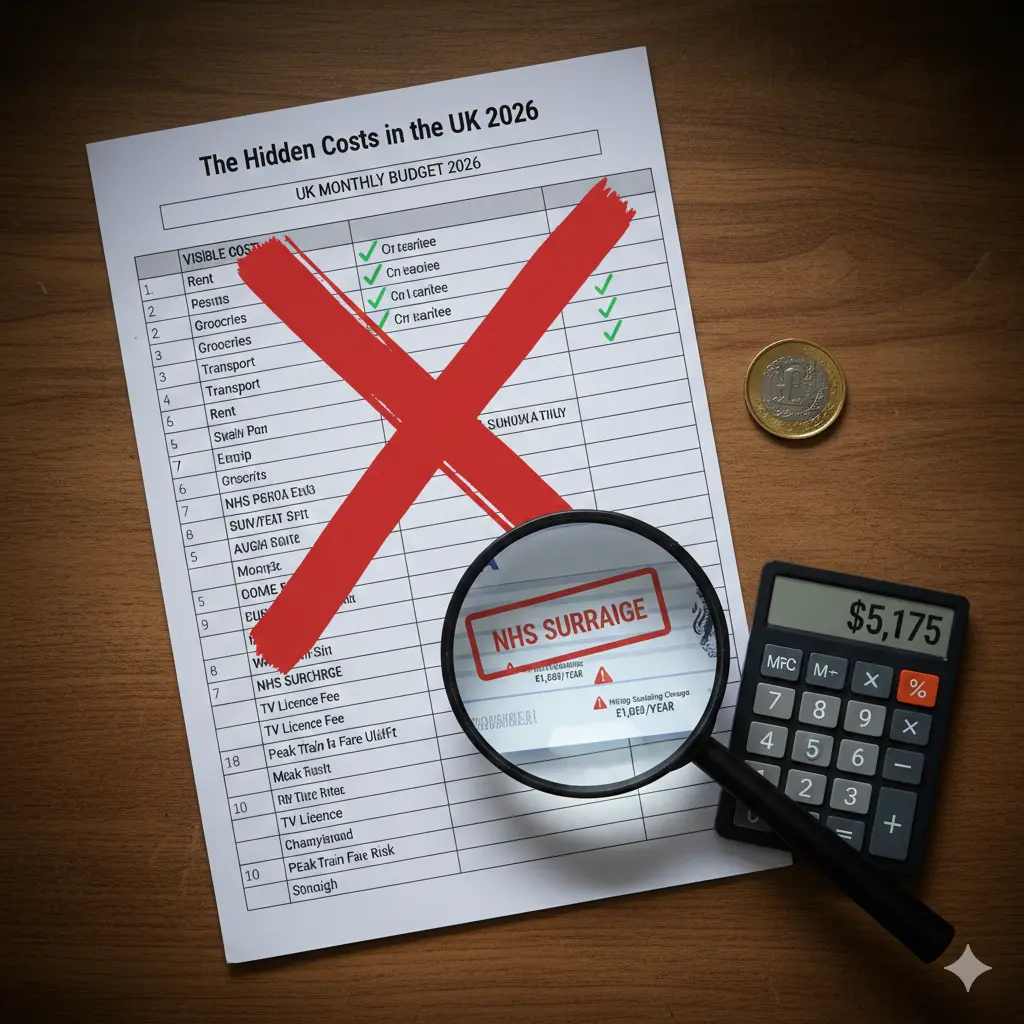
In 2026, the cost of accessing the NHS for visa holders has become one of the most significant upfront expenses.
- The Cost: Most adult visa applicants now pay £1,035 per year.
- The Trap: You must pay this for the entire duration of your visa upfront. If you are applying for a 5-year Skilled Worker visa, you need to have £5,175 ready just for healthcare before you even board the plane.
- Tip: Students and those under 18 pay a slightly reduced rate of £776 per year.
Check official UK visa fees and NHS surcharge
2. The TV Licence (It’s Not Just for BBC)
Many newcomers are shocked to learn that in the UK, watching “live” TV requires a licence.
- The Cost: £174.50 per year (2026 rate).
- The Rule: You need it if you watch any live TV (on any channel) or use BBC iPlayer.
- Penalty: Watching without one can lead to a fine of up to £1,000. If you only watch Netflix or YouTube, you don’t need it, but you must declare your exemption to avoid bailiffs.
The TV Licence is often the most forgotten among the hidden costs of living in the UK 2026.
3. Energy “Standing Charges”
Even if you turn off every light and never use the heating, you still pay for energy.
- The Reality: In 2026, “Standing Charges” (the daily fee to be connected to the grid) have remained high despite falling unit prices. You could pay around £0.65–£1.00 per day just for the privilege of having gas and electricity connections.
- Budget Impact: This adds roughly £300 a year to your bills before you’ve even boiled a kettle.
4. Public Transport “Peak” Pricing
If you live in London or commute to major cities like Manchester or Birmingham, your travel costs depend entirely on when you tap your card.
- The Surprise: Traveling at 8:59 AM can cost double what it costs at 9:01 AM.
- Pro Tip: Always check “Off-Peak” times for your specific rail line. In 2026, many rail cards (like the 26-30 or Railcard) offer 33% discounts, but often only on off-peak fares.
5. Water Bills (The Unmetered Risk)
Unlike electricity, some UK homes don’t have water meters. They pay a “Rateable Value” based on the property size.
- The Risk: If you are a single person living in a large old house without a meter, you could be paying for the water of a family of five.
- Solution: In most cases, you can request a Water Meter for free from your provider (e.g., Thames Water), which often slashes bills by 40% for low-occupancy homes.
How to Prepare for Unexpected UK Expenses
Beyond the hidden costs of living in the UK 2026 mentioned above, we recommend keeping an ‘Emergency Fund’ of at least three months’ expenses. Factors like inflation in public transport and sudden increases in Council Tax standing charges mean that your budget should always have a 10% buffer. Also, regularly checking for ‘Water Meter’ eligibility and ‘Energy Caps’ can save you hundreds of pounds annually.
Conclusion The secret to a stress-free life in the UK isn’t just a high salary; it’s knowing exactly where your money is going. By budgeting for these five “invisible” costs, you’ll avoid the common financial shocks that many new residents face in their first year. Ultimately, being aware of these hidden costs of living in the UK 2026 will help you save more for your future.