
Planning a move to West Yorkshire? Whether you’re looking at Leeds, Wakefield, or smaller towns like Featherstone, the promise of “plenty of agency work” is often the big draw. But as someone currently on the ground, I’ve realised that the numbers on the recruitment posters rarely match the reality in your bank account.
Today, I’m breaking down the true cost of living in West Yorkshire as an agency worker in 2026. No sugar-coating—just the hard maths.
The Salary Gap: Gross vs. Net (Take-Home Pay)
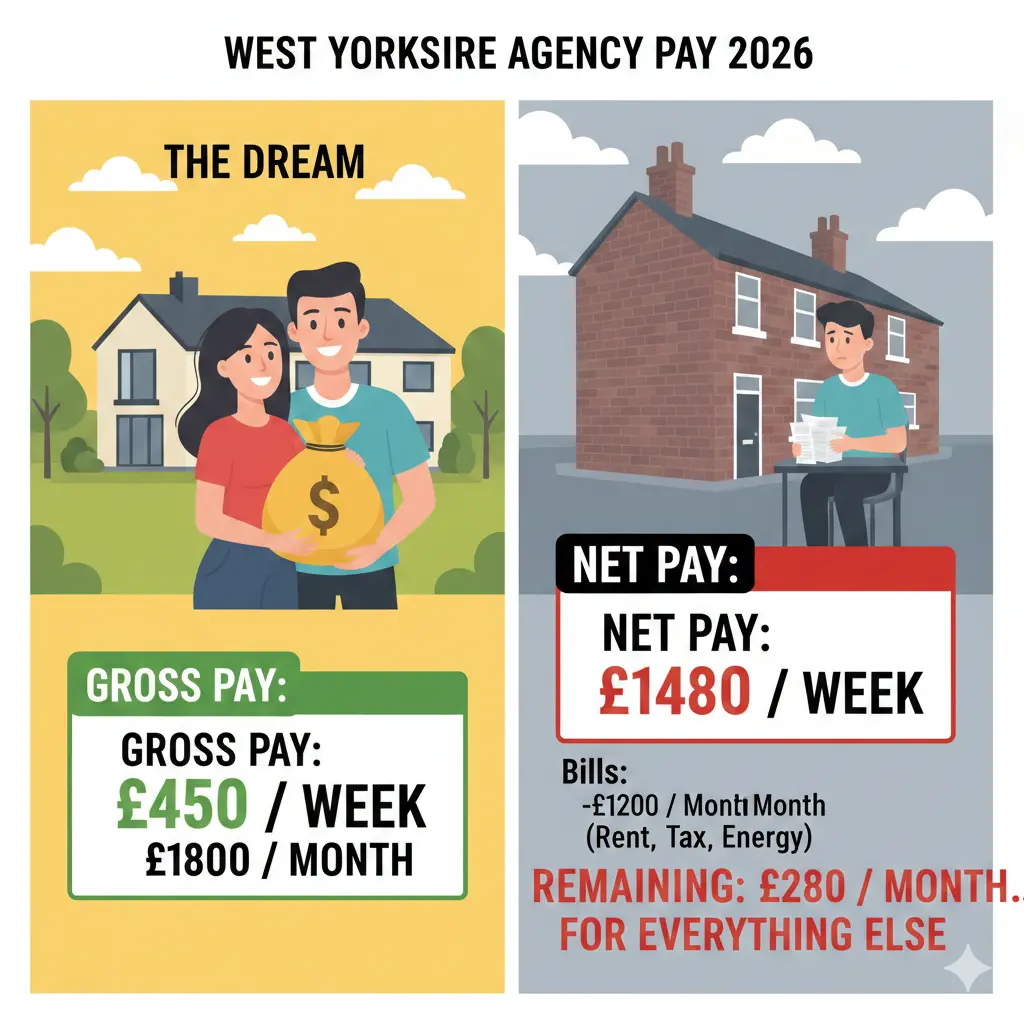
Most agencies will quote you a weekly rate. Let’s say you work a full 5-day week and earn around £450 gross. On paper, that looks like a decent start. However, once the taxman and other deductions take their share, the picture changes quickly.
| Item | Weekly Amount |
| Gross Pay | £450 |
| Tax, NI & Pension Contributions | -£80 |
| Actual Take-Home Pay | £370 |
This leaves you with roughly £1,480 per month. Now, let’s see how that stacks up against the local bills.
The Monthly Bill Breakdown in West Yorkshire

While West Yorkshire is generally cheaper than London or the South East, prices have surged in 2026. Here is what a realistic, “no-frills” budget looks like:
- Rent: £700 (Starting price for a basic 1-bed flat or a decent studio).
- Council Tax & Utilities (Energy/Water): £500+
- Total Fixed Costs: £1,200
The “Surviving” Budget: What’s Left?
The calculation is simple but brutal: £1,480 (Income) – £1,200 (Fixed Bills) = £280.
That £280 is all you have left for the entire month to cover:
- Weekly groceries and household essentials.
- Commuting costs (bus or train fares).
- Mobile phone and internet contracts.
- Any unexpected emergencies.
In West Yorkshire, living on £280 after bills isn’t “living”—it’s a daily exercise in extreme budgeting.
My Advice for Newcomers
If you are planning to move here for agency work, don’t just look at the hourly wage. Here are two things you must consider:
- Understand Your Deductions: Always ask the agency if you are being paid via PAYE or an Umbrella company. Umbrella companies often have extra fees that can eat even further into that £370 net pay.
- Consider a House Share: If you are on a single income, renting a whole flat is becoming unsustainable on minimum wage. A “House Share” (HMO) can bring your fixed costs down significantly, giving you more breathing room for food and savings.