
Moving to the UK can be exciting, but sorting out your money is often one of the first tricky challenges. Without a local bank account, paying rent or getting your salary can be a hassle, even everyday shopping can feel awkward if you’re using foreign cards. Luckily, opening an account is now much easier, especially with online and app-based banks that save you from waiting in long lines. This guide explains how to open one, how wages are usually paid, and shares handy tips, from using budgeting apps to finding supermarket offers, to help keep living costs under control once you’re settled.
Understanding UK Banking Basics
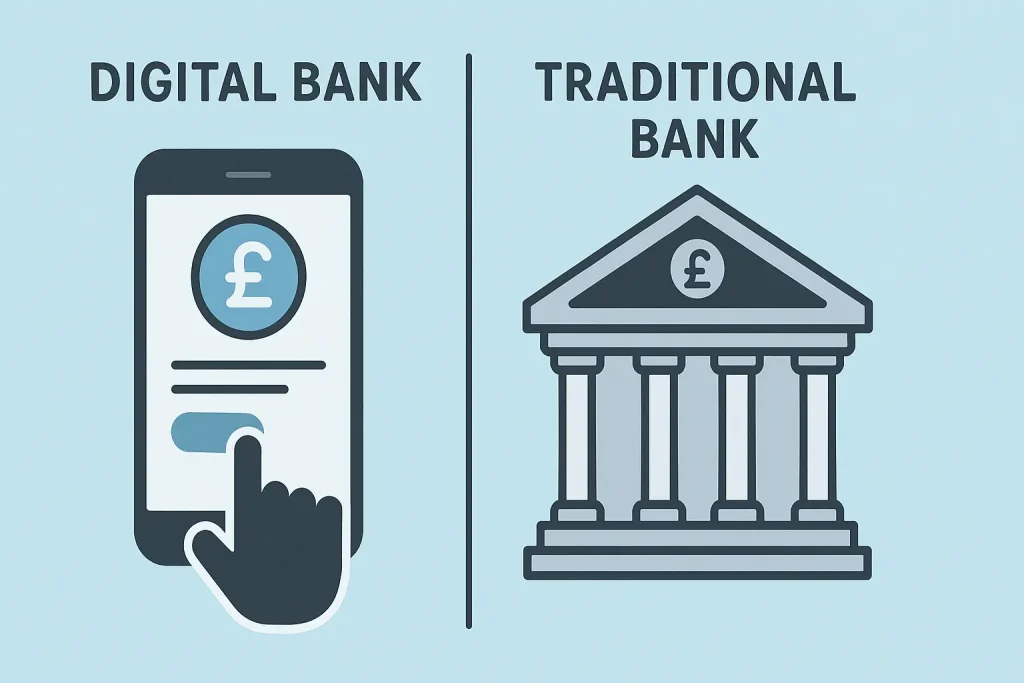
When you move to the UK, you’ll come across several types of bank accounts. For most people starting out, a current account is the easiest choice, it’s where your wages or payments go, it lets you set up bills, and comes with a debit card for everyday spending. Savings accounts often come later, once you’re settled and have extra money you want to put aside, whether for emergencies or bigger goals in the future.
Digital-only banks are now very popular, about 40% of UK adults use one. Mobile banking is standard, with 68% of people logging in at least every couple of weeks, and many checking even more often. App-based banks make it simple to send money, keep track of spending, and manage everything in one place.
Even so, traditional banks still attract the biggest number of customers, partly because they offer services you can only get face-to-face, from mortgage advice to help at the counter, or just the comfort of withdrawing cash in person. That in-person support can be useful when taking big financial steps like setting up a credit line. Many newcomers start with a traditional bank to gain confidence and get advice, then open a digital account later for speed and easy budgeting tools, this mix often works well.
| BANK TYPE | MARKET SHARE | KEY FEATURE |
|---|---|---|
| Digital-only banks | 40% | App-based services |
| Traditional banks | 60% | Branch and online |
Your choice comes down to what’s most important to you. Want quick sign-up and smart money features? Digital could be right. Prefer personal service and plan to look at bigger financial products soon? A traditional bank might be the better start.
How to Open a UK Bank Account as a Newcomer
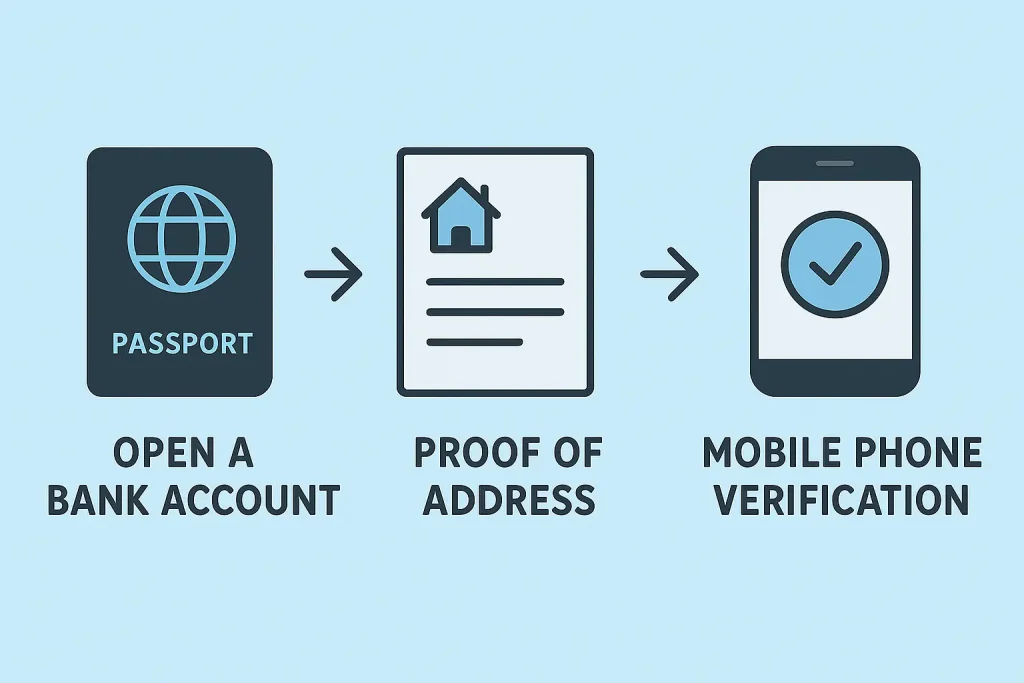
Opening a bank account in the UK isn’t as puzzling as it can look at first, though you’ll still need two essentials: proof of who you are and proof of where you live. Your passport or national ID usually covers the first requirement. The address part can be harder, especially if you’ve just landed. Many banks will accept tenancy agreements, recent utility bills, or an official letter from your employer. If you’re staying with friends or in short-term housing, you may need other options like a university confirmation letter (for students) or certain government papers, though not every bank will accept these.
These days, getting set up is much more sofa-friendly. You can often use video calls, upload documents securely, or even take a quick selfie for ID. App-based banks like Monzo and Starling usually get newcomers up and running quickly. Bigger names such as HSBC or Barclays have improved too, with some offering “new to the UK” accounts. These can come with multilingual help and months of free international transfers, handy if you’re sending money back home.
A good way to get started is to think about what’s most important before you apply:
- Pick your bank based on fees, extras, branch locations, and whether you like the mobile app.
- Prepare your documents, passport, visa, and a solid proof of address.
- Apply online or visit a branch; both options are still common.
- Get verified, which could be a short video call, a code sent by post, or extra ID checks.
- Activate and use your account, your debit card and online access usually arrive soon after approval.
Salary Breakdowns and Taxes
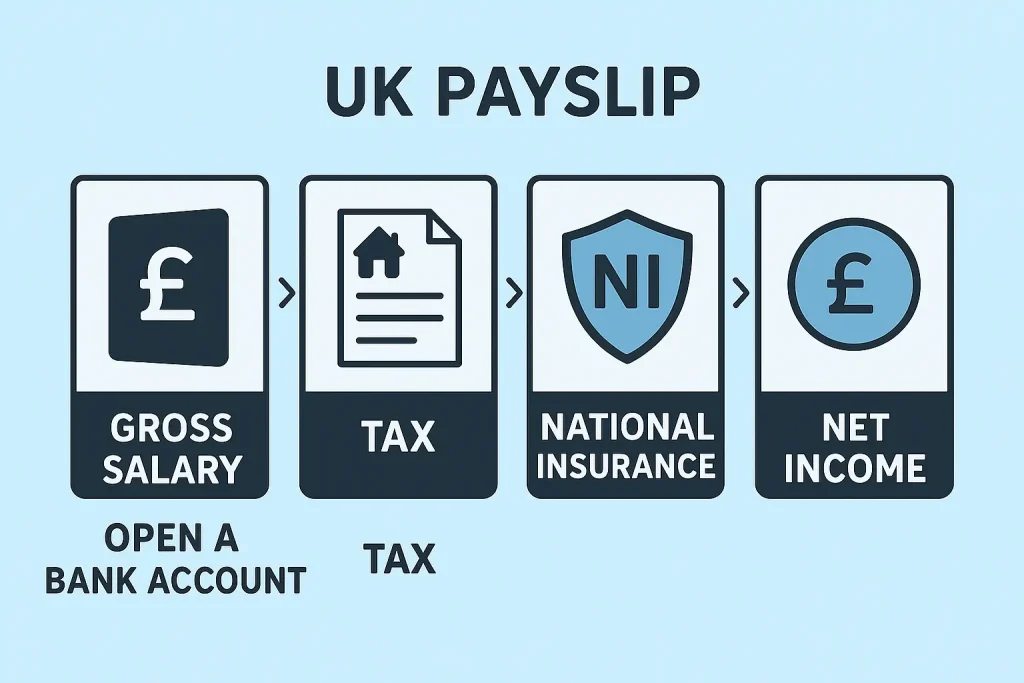
Getting a grip on what’s printed across your payslip can turn the whole financial side of life into something you can manage without the usual headache. In the UK, the salary shown is the full sum before tax or other deductions touch it. Once income tax and National Insurance are taken out, the total that actually reaches your account will be trimmed down.
You could run into other deductions too, such as payments toward student loans or contributions to a pension scheme—and on occasion both show up together, which catches some off guard. Your employer is required to give you a payslip that spells out your total pay, every deduction applied, and the final amount that lands in your account. That way, you can track exactly where each part of your earnings ends up month by month.
For the 2025/26 tax year:
- Personal allowance: £12,570 (this part isn’t taxed)
- Basic rate: 20% on £12,571, £50,270
- Higher rate: 40% on £50,271, £125,140
- Additional rate: 45% on anything above £125,140
National Insurance kicks in once yearly earnings pass £12,570. It chips in toward the state pension and a few government-run payouts. If you’re on a £30,000 salary, you’ll hand over tax and NI. When a workplace pension enters the picture, the tax relief it brings can quietly reshape how your finances balance out in the long run.
| ANNUAL SALARY | INCOME TAX | NATIONAL INSURANCE | NET INCOME |
|---|---|---|---|
| £25,000 | £2,486 | £1,860 | £20,654 |
| £40,000 | £5,486 | £3,260 | £31,254 |
When you’re mapping out a budget, folding these deductions in right from the outset can steer your monthly numbers toward something more grounded. Web tools that crunch your take-home pay can be handy for a fast check, and giving your tax code a once-over now and then might keep you from handing over more than you should.
Cost of Living Considerations
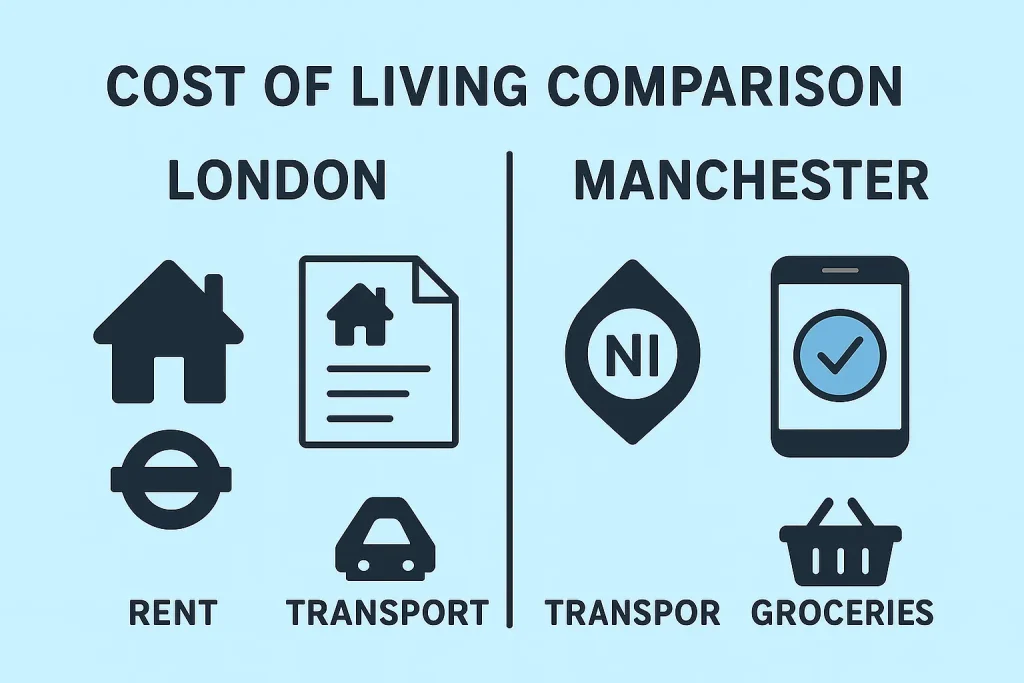
Living costs in the UK can differ a lot depending on where you choose to live. London is usually the most expensive, high rents, transport fares that eat into your pay, and everyday extras that add up quicker than you might expect. Smaller towns or mid-sized cities often feel easier on the budget and less stressful to get around. Aside from rent and bills, there are other costs people don’t always think about, home contents insurance, council tax, and certain healthcare needs that aren’t fully covered. Dental work, for example, is only partly paid for by the NHS, so you may need to plan for private charges.
In London, an average single person’s monthly costs could be:
- Rent: £1,500
- Utilities: £200
- Transport: £150
- Groceries and household items: £250
- Leisure and entertainment: £200
Manchester is usually more affordable, with costs closer to:
- Rent: £950
- Utilities: £180
- Transport: £90
- Groceries and household items: £220
- Leisure and entertainment: £180
One practical method for tracking your finances is by working with budgeting features in mobile banking apps; they’ll break spending into sections and ping you when you’re getting close to your limit. If you’re trying to trim grocery costs, supermarket loyalty cards can really pull their weight. Give it a few months and the accumulated points or discounts start shaving a clear chunk off your total.
Managing Your Finances Efficiently
Once your account is set up, keeping your money in good shape often comes down to a few steady habits. They might feel small at first, but over time they can really add up. Here are some simple ideas to try:
- Automate savings: Set up a payday transfer straight into your savings so it happens quietly in the background, like paying your future self first.
- Track spending: Your banking app can reveal sneaky costs, especially in “oops” areas like daily coffees or late-night impulse buys.
- Avoid overdraft fees: Keep a £50 cushion so unexpected bills don’t push you into pricey charges.
- Use budgeting tools: Many bank apps warn when you’re close to limits, and some break spending into clear charts that make patterns easy to spot.
Open Banking is making this simpler. Over 15 million Britons now link accounts in one place, with some apps great for tracking goals, whether it’s saving £500 for a trip or building an emergency fund. Starting these habits early can make your first months in the UK much easier.
Trends Affecting Newcomers in UK Banking
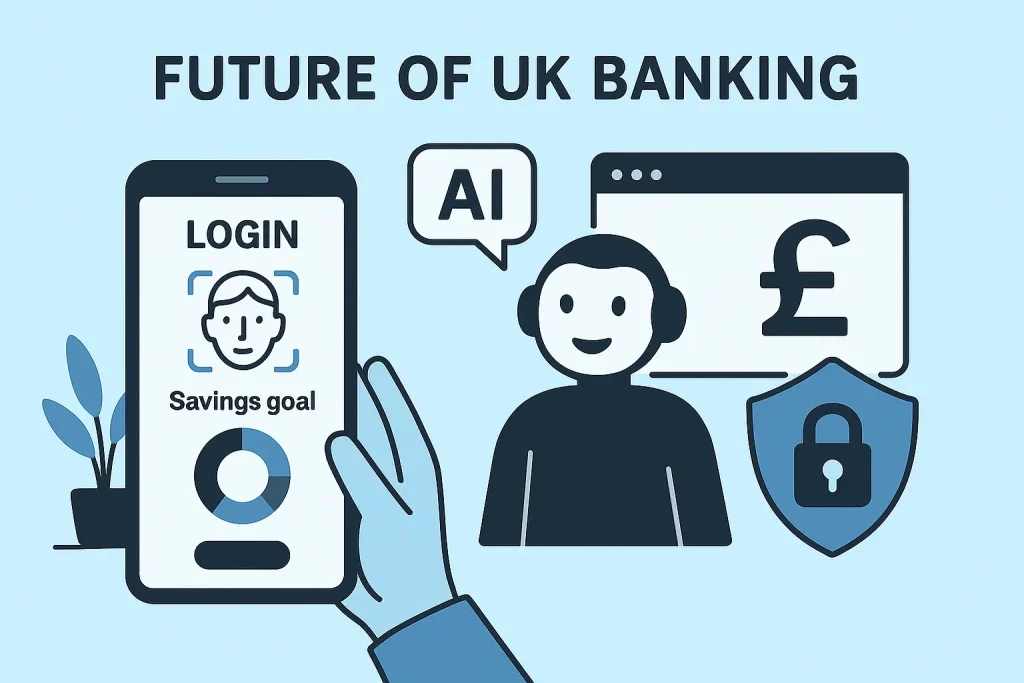
UK banking is shifting so quickly that newcomers can find it almost unrecognisable after just a couple of years. Neobanks now hold around 5.9% of people’s main accounts, up from 3.5% not long ago, showing how fast mobile-first, app-based banking is becoming the preferred choice. Artificial intelligence is now part of daily banking, quietly working behind the scenes to spot suspicious activity, give spending tips, and even warn users before they go over budget, especially handy for anyone prone to impulse spending.
Security has jumped ahead too. Fingerprint scans, facial recognition, and voice ID aren’t just for show, they often make logging in quicker while giving stronger protection than passwords alone. It can feel like using something straight out of the future.
Rules are changing as well, with more focus on competition and fairer deals for customers. The Prudential Regulation Authority helps guide new banks so they can grow safely, while the Current Account Switch Service keeps salaries and bills running smoothly when customers change banks.
For newcomers, this means easier account openings, genuinely useful budgeting features, and language options that fit their home-country preferences, making the start in UK banking far less intimidating.
Putting It All Together
Starting out with money matters in the UK tends to bring the big, hands-on hurdles first. There’s opening a bank account, seeing what’s left after tax and National Insurance, figuring out rent, utilities, and groceries, then pulling together a budget that’s solid enough to follow most months. These days, online banking can get an account set up quickly, keep an eye on where your money’s going, and lay out the months ahead in a way that feels manageable. Still, mixing a bit of face‑to‑face banking with app tools often means you get both the comfort of speaking to a person and the quick access of your phone.
The best bank is the one that matches your routine. For some folks, it’s tapping into the app anytime they need; for a different group, it’s a branch they can reach with a short ten‑minute walk. Apps for budgeting and web-based calculators can reveal how your wages measure up against rent and day‑to‑day costs. Revisiting that plan when life shifts—say you relocate or your salary climbs—helps you stay on track. Sometimes new banking options trim certain charges or shave off bits of your time, so they’re worth a look.
Got your ID and proof of address? Then look at account options that fit your lifestyle, get set up, and start building steady money habits, your UK move will feel much smoother.