

If you’ve tried to rent a flat in the UK recently, you’ve probably felt it — that sinking feeling when you refresh Rightmove, see the prices creeping up again, and wonder whether it’s just your area or something bigger. The problem starts with a simple question: why does rent keep rising, and what does rent inflation actually mean for everyday renters?
Curiosity follows quickly. You might have heard headlines about “rent inflation UK 2026 forecasts,” city-by-city breakdowns, or landlords raising rents due to their own rising costs. But getting a clear, simple explanation can be surprisingly tricky. Rent inflation is closely tied to the wider cost of living in the UK, especially when energy bills and council tax are rising at the same time.
Rent inflation is the rate at which rental prices increase in the UK, and it’s currently driven by high demand, limited housing supply, and rising landlord and maintenance costs. In 2026, rent inflation is expected to continue rising moderately, with stronger increases in major cities and student-heavy areas. Prices vary significantly by region, property type, and local market conditions.
This article breaks it down in a human, easy-to-read way — what’s happening, why it’s happening, and what renters across the UK may experience next.
What is rent inflation and why does it matter for UK renters?
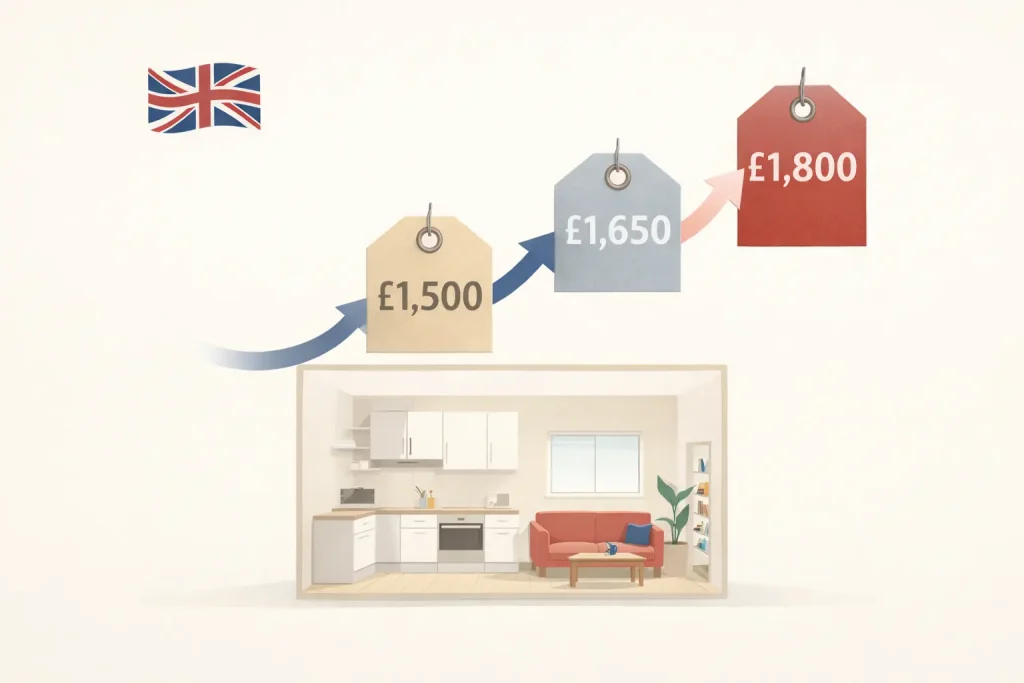
Rent inflation refers to the rate at which rental prices increase over time. It’s linked to general inflation, but the two don’t always move in the same direction. While inflation covers everything — food, energy, transport — rent inflation looks specifically at how much it costs to rent a home.
For many UK renters, rent is the single biggest monthly expense, often taking up 30–50% of income depending on the region. This is why even small rent increases can feel significant.
Why does rent inflation matter?
- It affects your monthly budget (rent, council tax, winter heating bills, broadband, travel).
- It influences where you can afford to live — city centre vs. outskirts.
- It shapes long-term decisions, such as whether to move, negotiate, or stay put.
Mini-summary: Rent inflation simply means rental prices rising over time. It matters because it directly affects affordability and quality of life for millions of UK renters.
Why is rent inflation rising in the UK?
Rent inflation UK trends generally stem from several overlapping factors. None of them operate alone, and the impact varies between regions — what’s happening in Manchester isn’t always mirrored in Brighton or Belfast.
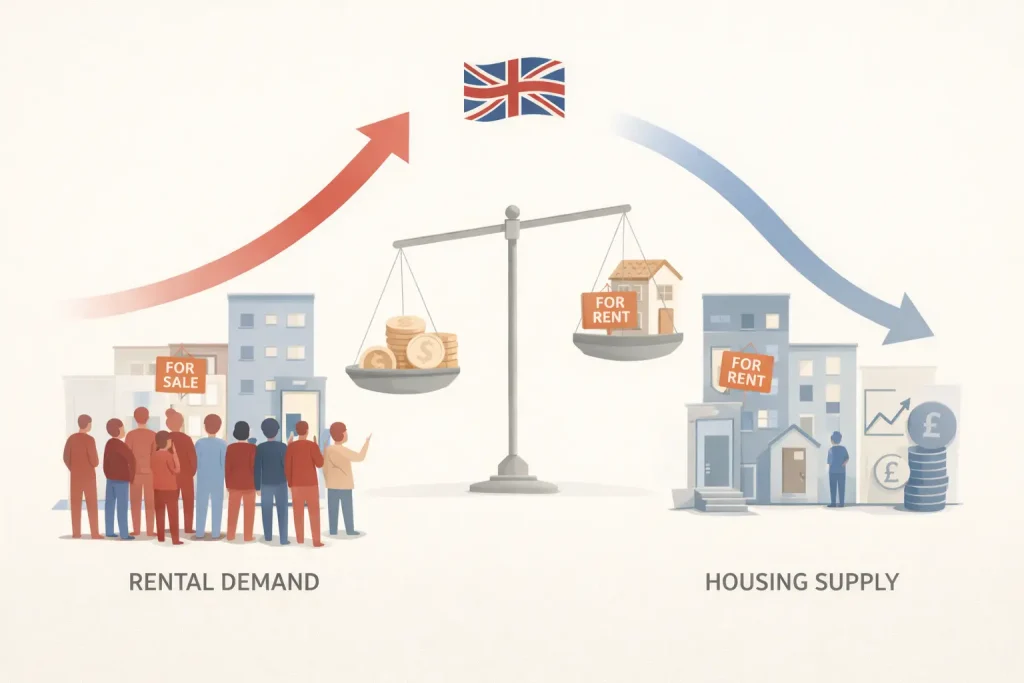
1. High demand and low supply
The UK has a long-standing shortage of affordable rental homes. Many cities — especially London, Bristol, Edinburgh, and Birmingham — face high demand from:
- Students
- Young professionals
- Families relocating for work
- International workers
When demand outstrips supply, prices rise almost automatically.
2. Rising landlord costs
Although renters don’t always see this side, many landlords face higher:
- Mortgage payments (due to interest rate increases)
- Maintenance and repair costs
- Insurance
- Compliance costs (EPC rules, safety checks)
Many landlords pass some of these costs on through rent increases — though not always.
3. General inflation and living cost pressures
Energy prices, building materials, and labour costs have all seen significant inflation. This indirectly increases rental prices too.
4. Regional economic differences
Rent inflation UK-wide averages hide local variations. For example:
- London often sees above-average rent inflation due to demand and higher wages.
- Northern cities may see lower increases but still face local pressure from regeneration projects and population growth.
- Rural areas can spike if demand rises for remote or quieter living.
Rent inflation rises due to supply shortages, landlord costs, general inflation, and local economic differences.
What does rent inflation look like in the UK in 2026?
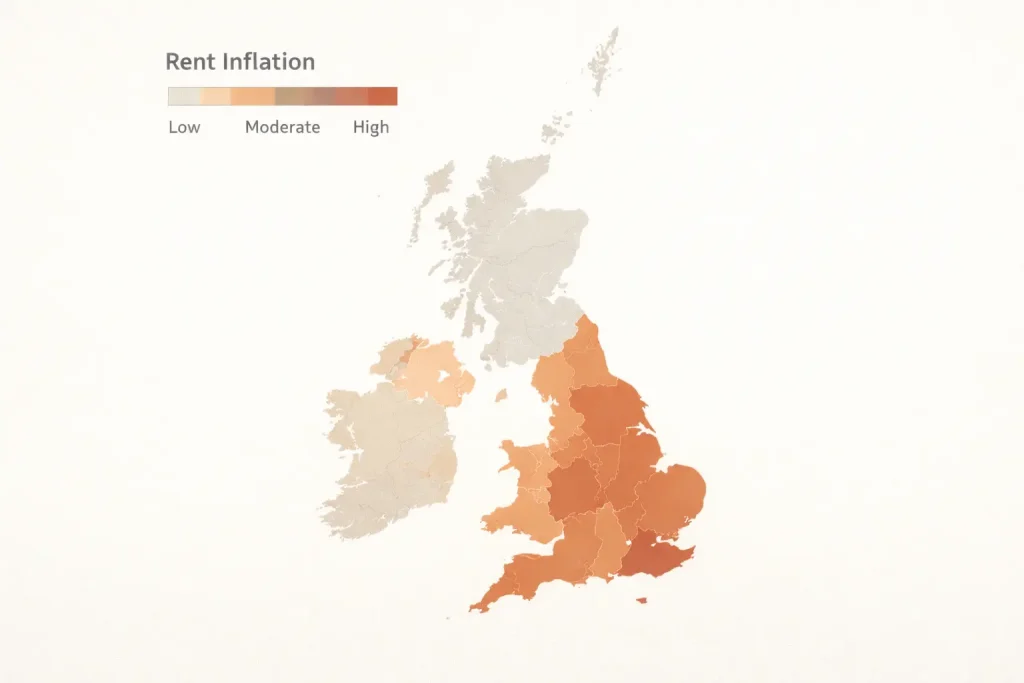
Predictions for rent inflation UK 2026 vary, but most analysts expect moderate but continued increases. While dramatic spikes like those seen in 2022–2023 are less likely, rent inflation may remain above average in high-demand cities.
Broad expectations for 2026 include:
- Slight stabilisation in London, though still pricey compared to elsewhere
- Continued growth in cities with large student populations
- Higher inflation in commuter towns if remote/hybrid working trends shift
- Regional variation — coastal towns may see faster changes due to regeneration and tourism demand
Which areas may see higher rent inflation?
While this is not guaranteed, historically areas with:
- Major universities
- Strong tech or finance sectors
- New transport links
- Limited rental stock
…tend to experience above-average rent inflation.
Which areas may see slower increases?
Places with:
- More available housing
- Lower population growth
- Less pressure from tourism or short-term lets
…often see milder changes.
Rent inflation UK 2026 is expected to continue rising moderately, with strong regional differences and continued pressure in high-demand cities.
How can renters cope with rising rent inflation in the UK?

While you can’t control the market, you can take steps to protect your budget and options.
1. Know your local market
Prices in the UK vary dramatically:
- A one-bed flat in central London may cost more than a terraced house in Leeds.
- Heating costs in older Scottish properties may be higher due to colder winters.
- Council tax bands differ widely across regions.
Checking local averages helps you spot overpriced listings or negotiate.
2. Consider transport vs. rent trade-offs
Living slightly outside city centres often:
- Reduces rent
- Gives you larger living spaces
- Lowers noise levels
- Provides more stable rent inflation
But it may increase commuting time or travel costs — balance is key.
3. Negotiate respectfully
Many landlords are open to:
- Longer tenancy agreements
- Stable rent increases
- Minor compromises (painting, small repairs)
A polite, well-reasoned request often gets better results than expected.
4. Track your monthly costs
Rent is only part of the picture. Factor in:
- Council tax band rates
- Broadband speed options
- Winter heating bills
- Travel passes
- Water bills
These can change your total cost more than the rent itself.
Renters can manage rising rent inflation by researching local prices, balancing transport vs. location, negotiating calmly, and reviewing total living costs.
FAQ: Common questions about rent inflation UK
Is rent inflation the same as general inflation?
Not exactly. General inflation covers all goods and services, while rent inflation focuses purely on housing rental costs.
Will rent inflation UK fall in 2026?
There may be periods of slower growth, but analysts generally expect moderate increases due to ongoing demand and supply issues.
Does rent inflation affect students?
Yes. Student-heavy cities often see faster rises due to high demand around universities.
Can I challenge a rent increase?
In many cases, yes — especially within certain tenancy types. Always check official UK guidance before taking action.
Does location really make a big difference?
Absolutely. Rental prices and inflation rates vary widely between cities, regions, and even neighbourhoods.
Rent inflation in the UK refers to the rising cost of renting homes and is driven by high demand, limited supply, and increasing landlord costs. Trends suggest that rent inflation in 2026 will continue to rise moderately, with noticeable differences between regions. High-demand cities, student areas, and regenerated neighbourhoods may see the strongest increases. Renters can manage rising costs by understanding local markets, negotiating respectfully, and balancing rent with other living expenses. According to UK rental price data from official sources, rental costs have consistently outpaced wage growth in many regions.
Rent inflation is the rate at which rental prices increase in the UK, and it’s currently driven by high demand, limited housing supply, and rising landlord and maintenance costs. In 2026, rent inflation is expected to continue rising moderately, with stronger increases in major cities and student-heavy areas. Prices vary significantly by region, property type, and local market conditions.