
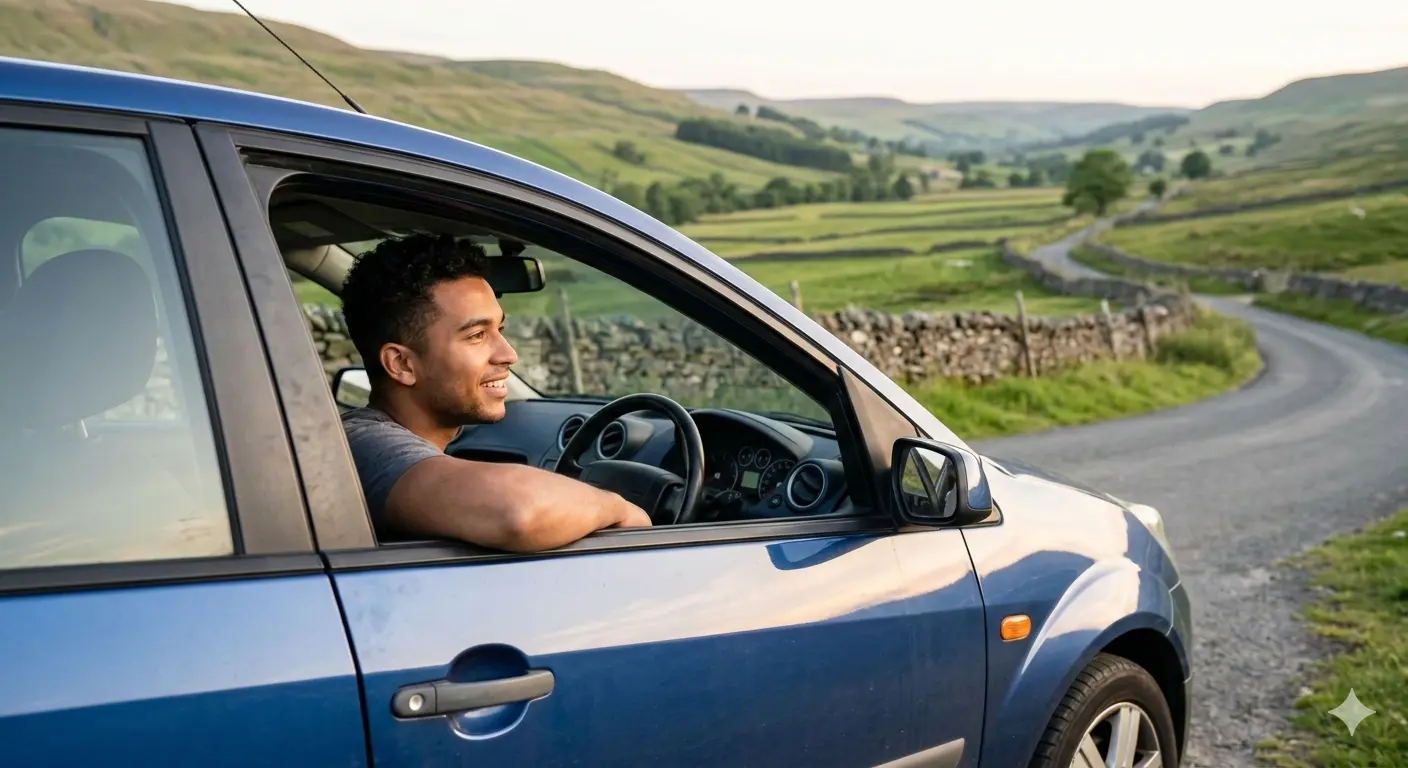
If you’ve just moved to the UK—perhaps settling in a place like Featherstone or West Yorkshire—you’ll quickly realize that while public transport is okay, a car is freedom. It’s the difference between a 2-hour bus journey to Leeds and a 25-minute drive.
However, for a newcomer, the UK car market is a minefield. You can buy a decent Ford Fiesta for £2,000, only to discover the insurance costs you £3,500 per year. Don’t let this be you. Here is my mentor-level guide to buying a car and beating the insurance system in 2026.
1. Where to Buy: Dealers vs. Private Sellers
Where you buy determines your legal protection.
- Main Dealers: Most expensive, but you get a warranty and “Consumer Rights Act” protection.
- Independent Garages: Middle ground. Always check their Google Reviews.
- Private Sellers (Facebook/eBay): Cheapest, but “Sold as Seen.” If the engine blows up 5 miles down the road, you have zero recourse.
Mentor’s Tip: If you’re new to the UK, I recommend a small independent garage with a good reputation. The extra £300 for a 3-month warranty is peace of mind you’ll want.
2. The Non-Negotiable “Paperwork” Checklist
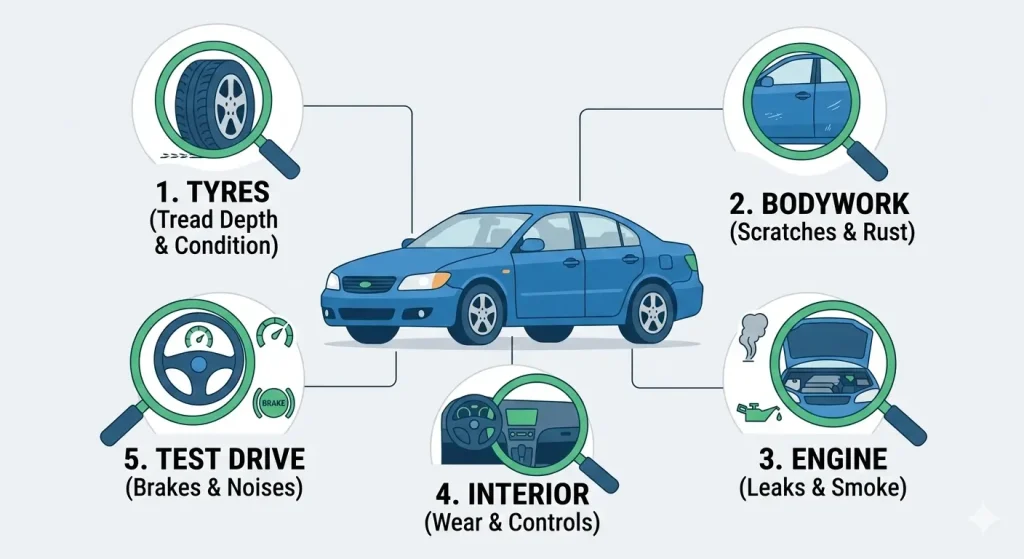
In the UK, a car’s history is mostly digital and public. Use this to avoid buying a “lemon.”
The MOT History (Free)
Every car over 3 years old needs an annual safety check (MOT). Go to GOV.UK Check MOT History and enter the plate.
- Look for: “Major defects” or repeated advisories on rust (corrosion) or suspension. In Yorkshire, salt on the roads in winter causes rust—check this carefully!
The HPI Check (Paid, but Vital)
Spend the £10-£20 for an HPI check (or CarVertical). It reveals:
- Category S or N: Has the car been written off by insurance after an accident?
- Outstanding Finance: Does the seller still owe a bank for the car? If they do, the bank technically owns the car, not you.
3. The Insurance “Masterclass”: How to Save £1,000+
This is the part everyone searches for. As a newcomer with no “UK No Claims Bonus,” you are a high risk to insurers. Here is how we fix that:
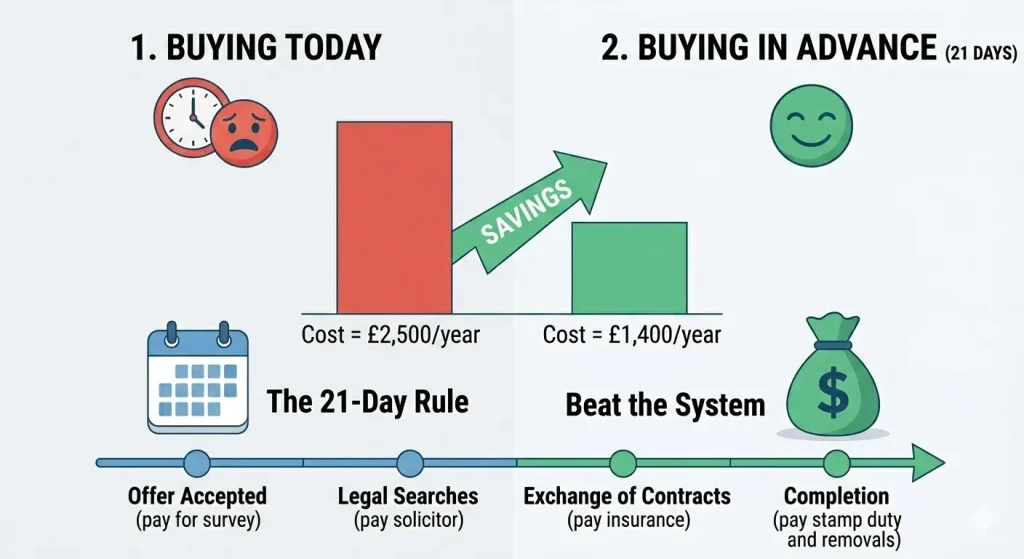
The 21-Day Rule
Never buy insurance to start today. Data shows that buying your policy 20 to 26 days in advance can be 40% cheaper than buying it on the spot. Why? Insurers think people who plan ahead are “safer” drivers.
The “Named Driver” Trick
Add a friend or colleague who has held a UK driving license for 5+ years and has a clean record as a secondary (named) driver on your policy. Even if they never drive the car, their presence on the policy can slash your premium significantly.
Job Titles Matter
Are you a “Software Engineer” or a “Computer Programmer”? Use a comparison tool to check. Sometimes, minor tweaks to your job title (as long as they remain accurate) can change your “risk profile.”
4. Understanding UK Car Categories (The “Cat” Trap)
You’ll see cars listed as “Cat S” or “Cat N.”
- Cat N (Non-structural): Cosmetic damage. Often a bargain, but harder to resell.
- Cat S (Structural): The car’s frame was damaged. Avoid this unless you are a mechanic; it can be dangerous and nearly impossible to insure cheaply as a newcomer.
5. Total Cost of Ownership Table (Estimated)
| Item | Annual Cost (Budget) | Note |
| Road Tax (VED) | £20 – £190 | Depends on CO2 emissions. |
| Insurance | £1,200 – £2,500 | High for first-year residents. |
| MOT & Service | £250 – £400 | Mandatory annual check-up. |
| Fuel | £1,200 | Based on 8,000 miles/year. |
Final Verdict: My Step-by-Step Strategy
- Get your UK Bank Account ready: You’ll need it for the Direct Debit. (See my [UK Bank Account Guide] for more).
- Find a car on AutoTrader within a 20-mile radius of Featherstone.
- Run a free MOT check.
- Quote for insurance BEFORE you buy the car. If the insurance is £4,000, don’t buy that car!
- Pay via Bank Transfer and ensure you get the “New Keeper” supplement of the V5C logbook.
Buying a car is the second biggest expense after your home. Take your time, do the checks, and use the 21-day rule to keep your hard-earned cash in your pocket.