

Planning to move to the UK in 2026? This guide breaks down the monthly living costs for singles, couples, and families across London, Manchester, Glasgow, and more, including rent, utilities, food, transport, and leisure. What is the real cost of living UK residents face today? is a crucial question that many individuals ask before making any decisions.
If you want to live comfortably and realistically in the UK, you must have a firm grasp of your daily expenditures, which include things like rent, food, transit, utilities, and wages.
This guide provides a clear, honest, and up to date breakdown of the cost of living in the UK. It is created for those who prefer hard data over guesses. This book will assist you in making educated choices about your relocation, education, employment, or even just comparing living conditions.
How Much Is the Cost of Living in the UK?
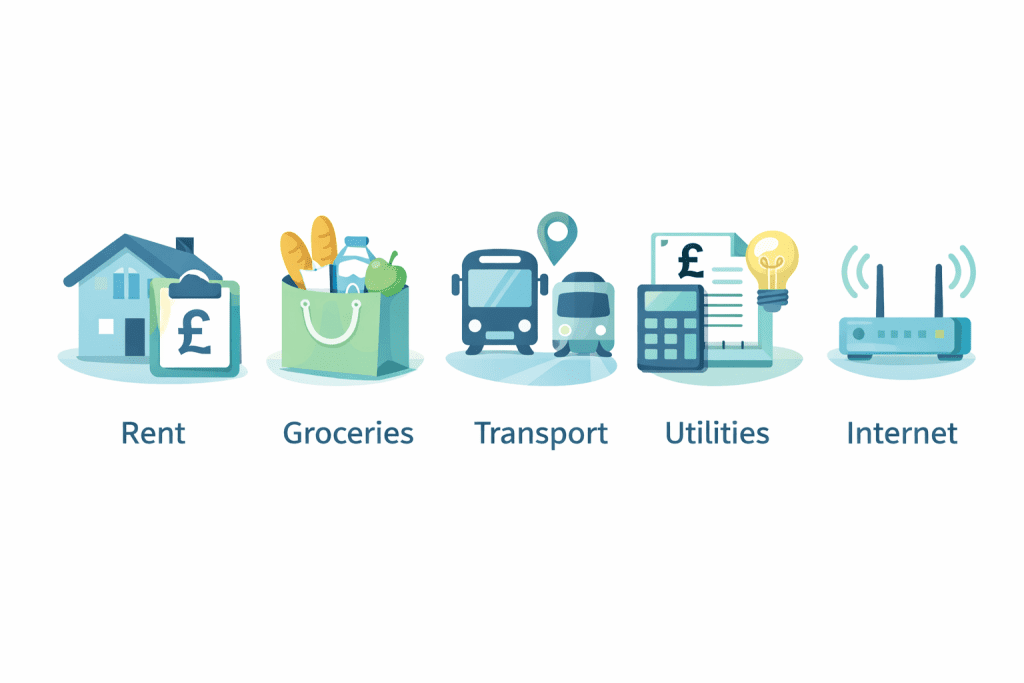
Depending on where you live, how you live, and how big your family is, the cost of living UK-wide vary greatly. The northern regions and smaller towns are more budget friendly compared to London, the most costly metropolis.
Average Monthly Cost of Living (Single Person)
| Expense Category | Average Monthly Cost (£) |
|---|---|
| Rent (1 bed flat) | £700 – £1,200 |
| Groceries | £180 – £250 |
| Transport | £90 – £180 |
| Utilities & Council Tax | £150 – £250 |
| Internet & Mobile | £35 – £50 |
| Miscellaneous | £100 – £200 |
Estimated total: £1,300 – £2,100 per month
A moderate lifestyle, not extravagant expenditure, is shown by these statistics.
Cost of Living by City in the UK
The cost of living in the UK can vary significantly depending on the city you live in. While national averages provide a general picture, real monthly expenses are largely shaped by local housing markets, transport systems, and lifestyle costs. Understanding these regional differences is essential for anyone planning to move, work, or study in the UK.
Below is a realistic overview of how living costs compare across some of the UK’s major cities.
London
London has the highest cost of living in the UK by a considerable margin. Housing costs dominate monthly expenses, with rent often accounting for more than half of total spending. Even outside central areas, rental prices remain high compared to the rest of the country.
Transport costs are also above average, although extensive public transport reduces the need for car ownership. Everyday expenses such as groceries, dining out, and entertainment tend to be more expensive, particularly in central zones.
Despite higher salaries on average, many residents find that disposable income in London is not significantly better than in cheaper cities once housing and commuting costs are factored in.
👉If you wonder about cost of living in London give it a go for our Monthly Living Cost in London guide.
Manchester
Manchester is often seen as a more affordable alternative to London, but living costs have risen noticeably in recent years. Rent is still significantly cheaper than in the capital, though popular central neighbourhoods and new developments have pushed prices upward.
Transport costs are moderate, and many residents benefit from shorter commuting distances. Grocery and daily living expenses are close to the UK average, making Manchester a balanced option for professionals and families seeking city life without London level costs.
Birmingham
Birmingham generally offers lower living costs compared to London and Manchester, particularly when it comes to housing. Rent prices are more accessible, especially outside the city centre, making it attractive for families and first time renters.
Public transport costs are reasonable, and car ownership is more common than in London. Overall monthly expenses in Birmingham tend to sit below the national average, although wages can also be slightly lower depending on the industry.
Leeds and Other Northern Cities
Cities such as Leeds, Liverpool, and Sheffield typically have some of the lowest living costs among major UK urban areas. Rent is considerably cheaper, and daily expenses like food, transport, and leisure are more manageable.
These cities are often appealing to students, young professionals, and remote workers who want a lower cost of living without sacrificing access to amenities, culture, and employment opportunities.
Monthly Living Costs by Category
Housing and Rent Costs in the UK
Housing is the largest factor affecting the cost of living in the UK. Rent levels play a decisive role in determining overall living costs. Whether someone rents or owns a property, housing related expenses often account for a substantial portion of monthly income.
Rental prices vary widely depending on location, property type, and demand. In major cities and high demand areas, rent can consume more than 40–50% of monthly earnings, particularly for single tenants. Outside large urban centres, housing costs are generally lower, offering more affordable options for families and long term residents.
Renting is far more common in cities, especially among young professionals, students, and recent arrivals to the UK. Flats and shared accommodation tend to be the most affordable choices, while houses and new build properties usually come with significantly higher monthly costs.
Home ownership, while often associated with long term stability, also comes with additional expenses beyond mortgage payments. Council tax, maintenance, insurance, and utility bills can add a noticeable financial burden, particularly for older or larger properties.
👉 We explain more about House Bills Per Month in the UK if you have questions in your mind about it.
Regional differences remain one of the most important factors affecting housing costs. London and the South East have the highest rent levels, while northern England, Wales, and parts of Scotland generally offer more affordable housing. These regional gaps strongly influence where people choose to live and work.
For a detailed breakdown of how rental prices compare across different locations, city by city comparisons provide a clearer picture of the UK housing market.
👉 You can find price differences between cities on our UK Rent Prices by City.
Overall, housing costs shape not only monthly budgets but also lifestyle choices, commuting patterns, and long term financial planning. Understanding rent and housing expenses is essential when assessing the true cost of living in the UK.
Rent Prices by Region
- London: £900 – £1,500 (1 bedroom flat)
- South East: £800 – £1,200
- Midlands: £600 – £850
- North of England: £500 – £750
- Scotland & Wales: £550 – £800
Rent prices are typically higher in city centres and well connected areas.
Additional Housing Costs to Consider
- Security deposit (usually 5 weeks’ rent)
- Council tax
- Electricity, gas, and water
- TV licence (£159 per year)
Transport, Food & Daily Expenses

The cost of living UK residents manage daily includes transport costs.
Public Transport
- Monthly bus pass: £60 – £90
- Monthly train travel (commuting): £120 – £300
- London travelcard (zones 1–2): £160+
Car Ownership Costs
- Fuel: £120 – £180 per month
- Insurance: £40 – £100
- Road tax and maintenance: variable
In major cities, using public transit is often less expensive.
Beyond housing, everyday expenses such as transport, food, and routine spending play a key role in shaping monthly living costs in the UK. While these costs are generally more predictable than rent, they can still vary depending on location, lifestyle, and personal habits.
Public transport is widely used in major UK cities, particularly in London, where owning a car is often unnecessary. Monthly transport costs typically depend on commuting distance, travel zones, and the availability of discount schemes. In smaller cities and towns, transport costs are often lower, though car ownership may be more common and add additional expenses such as fuel, insurance, and maintenance.
Food and grocery costs in the UK are relatively stable compared to housing expenses. Supermarket prices are fairly consistent nationwide, but shopping habits can make a noticeable difference. Cooking at home, buying own brand products, and planning weekly meals can help keep food spending within a reasonable range, while frequent dining out can quickly increase monthly costs.
Daily expenses also include mobile phone plans, internet services, personal care, and occasional leisure activities. These costs may seem minor individually, but together they form a significant part of monthly spending. Managing subscriptions and discretionary expenses can help maintain a balanced budget, especially for those living in higher cost areas.
Food and Grocery Costs

Depending on buying habits, food expenditures may be flexible, since they are reasonably consistent throughout the UK.
Average Monthly Grocery Costs
- Single person: £180 – £250
- Couple: £300 – £400
- Family of four: £500 – £650
You may cut your monthly grocery bill in half by shopping at discount supermarkets like Lidl and Aldi instead of upscale ones.
Overall, transport, food, and daily living expenses reflect lifestyle choices more than fixed obligations. Understanding these costs helps build a realistic picture of what day to day life in the UK actually costs.
Utility Bills and Council Tax
The cost of living in the UK is influenced by utilities.
Monthly Utility Breakdown
- Electricity & gas: £90 – £150
- Water: £25 – £35
- Council tax: £80 – £150 (band dependent)
- Internet: £25 – £35
Seasonal variations cause energy prices to rise throughout the winter.
Salaries vs Cost of Living in the UK
It is critical to comprehend salaries in conjunction with costs.
Average UK Salaries
- National average salary: £34,000 (gross)
- Minimum wage (full time): ~£21,500
- London average salary: £41,000+
A £34,000 wage nets down to around £2,200 per month after taxes.
Is the Salary Enough?
- In London: tight but manageable with budgeting
- Outside London: generally comfortable
- Dual income households: significantly easier
How Salary Levels Impact Quality of Life
While headline salary figures provide a useful benchmark, real purchasing power depends heavily on location and lifestyle. A salary that offers a comfortable standard of living in one region may feel restrictive in another, particularly when housing costs vary so widely across the UK.
In London and the South East, higher average salaries often fail to offset elevated rent and transport expenses. Many professionals earning above the national average still need to budget carefully, especially if they live alone or support a family. Shared accommodation and longer commutes are common strategies used to balance income and living costs in high priced areas.
Outside major metropolitan areas, salaries are typically lower, but reduced housing and daily expenses often lead to better overall affordability. In these regions, a moderate income can stretch further, allowing for higher savings rates or improved quality of life. This regional trade off plays a key role in relocation decisions for both UK residents and newcomers.
Another important factor is household composition. Dual income households generally manage cost pressures more effectively, while single earners may feel a greater financial strain, particularly in high cost cities. Access to employer benefits such as remote work options, travel allowances, or childcare support can also influence how well salaries align with living costs.
Ultimately, evaluating salaries in isolation can be misleading. A realistic assessment of income must account for regional living expenses, household structure, and long term financial goals. Understanding how salaries interact with the broader cost of living helps individuals make informed decisions about where to live and work in the UK.
Can You Live Comfortably in the UK?
Yes, but comfort depends on location, lifestyle, and expectations.
Comfortable Living Is Easier If You:
- Spend your days away from London
- Split the cost of living
- Opt for public transit
- Keep tabs on your monthly expenses
- Get rid of subscriptions you don’t need.
Advantages of Living in the UK
- Strong job market
- Free healthcare (NHS)
- High-quality education
- Cultural diversity
- Stable economy
Disadvantages
- High rent in major cities
- Rising energy costs
- Council tax can be confusing
- Childcare is expensive
Cost of Living UK: Comparison by City
| City | Monthly Cost (£) | Affordability |
|---|---|---|
| London | £1,900 – £2,500 | Low |
| Manchester | £1,400 – £1,800 | Medium |
| Birmingham | £1,300 – £1,700 | Medium |
| Leeds | £1,250 – £1,600 | High |
| Glasgow | £1,200 – £1,550 | High |
Frequently Asked Questions (FAQ)
Is the cost of living in the UK high?
Sure, as compared to a lot of other nations. However, a lot of the costs are covered by wages and public services.
Is London more expensive than the rest of the UK?
Yes. The expense of living and travel in London is much more.
How much money do you need to live in the UK?
Depending on where you live, a single individual usually requires between £1,400 and £2,000 a month.
Is the UK affordable for international students?
Even outside of London, it’s possible, but you’ll need to plan ahead financially.
Does the UK offer financial support?
Yes. Some locals can be eligible for discounts on council taxes, grants, or other perks.
Final Thoughts: Is the Cost of Living in the UK Worth It?
The cost of living UK residents face in 2026 is not cheap, but with careful preparation, it can be managed. Great public services, good living standards, and excellent job prospects are all available in the United Kingdom.
Living in the UK may be financially viable and personally gratifying if you know what you’re spending, choose the correct place, and plan properly.
Stay updated! Follow us for the latest UK living cost trends and tips.