

Moving house in the UK can feel like navigating a maze of administrative tasks, hidden costs, and tight deadlines. From registering with the local council to setting up utilities and protecting your tenancy deposit, the process is laden with critical steps. If missed, these details can lead to significant financial penalties, service delays, and logistical chaos. This comprehensive UK moving checklist is designed to be your definitive, step-by-step guide, breaking down the entire process into a clear, manageable timeline that ensures nothing is overlooked.
We have structured this guide to be more than just a simple to-do list; it is a strategic blueprint for a successful move. We will walk you through everything from the initial planning stages two months out-including budgeting and property viewings-to the final administrative tidy-up after you’ve unpacked, such as updating your address with HMRC and registering with a local GP.
This guide provides the actionable, UK-specific advice you need, whether you are a student moving to a new city, a family relocating, or an international professional settling in for the first time. We will cover specific legal rights for renters, the intricacies of council tax bands, and the non-negotiable steps for securing your utilities without interruption. Think of this as your project plan for a relocation that is organised, on-budget, and as stress-free as possible. Let’s get started on ensuring your move is seamless from start to finish.
1. Register with Council Tax and Understand Your Banding
A crucial and time-sensitive task on any UK moving checklist is handling Council Tax. This is a mandatory annual tax levied by local councils on residential properties to fund local services like rubbish collection, schools, and emergency services. It’s an unavoidable part of your housing costs, so understanding it is essential for accurate budgeting.
How Council Tax Works
Your property is assigned a ‘band’ (from A to H in England and Scotland, A to I in Wales) based on its estimated value at a specific point in time (1 April 1991 for England and Scotland). Each band corresponds to a set annual charge, which varies significantly between different councils. For example, a Band D property in a London borough might cost over £2,000 per year, while the same band in a Manchester suburb could be closer to £1,800.
Upon moving in, you are legally required to inform the local council of your new residency. This allows them to register you for Council Tax and issue your bill. You can typically pay this bill in 10 or 12 monthly instalments.
Actionable Steps and Tips
To manage this process smoothly, follow these steps immediately after your move:
- Register Promptly: Don’t wait for a letter. Visit your new local council’s website and register your move-in date online. You usually have 21 days to do this, but acting sooner prevents potential penalties.
- Check Your Band: You can easily find your property’s band using the official gov.uk Council Tax band checker. This helps you anticipate your bills.
- Apply for Discounts: If you live alone or only with other adults who are ‘disregarded’ for Council Tax purposes (like full-time students), you are entitled to a 25% single-person discount. This is a significant saving and often requires a simple online application.
- Set Up a Direct Debit: This is the easiest way to ensure payments are made on time, avoiding late fees.
- Keep Documentation: Hold onto your tenancy agreement or completion statement as proof of your move-in date, which is vital for ensuring you’re only billed from the day you became responsible for the property.
Understanding how to manage your bill is a key part of settling into a new home. For more detailed guidance, you can learn how to check your Council Tax bill online in the UK and explore the specific rules in your area.
2. Arrange Utility Connections (Gas, Electricity, Water, Internet)
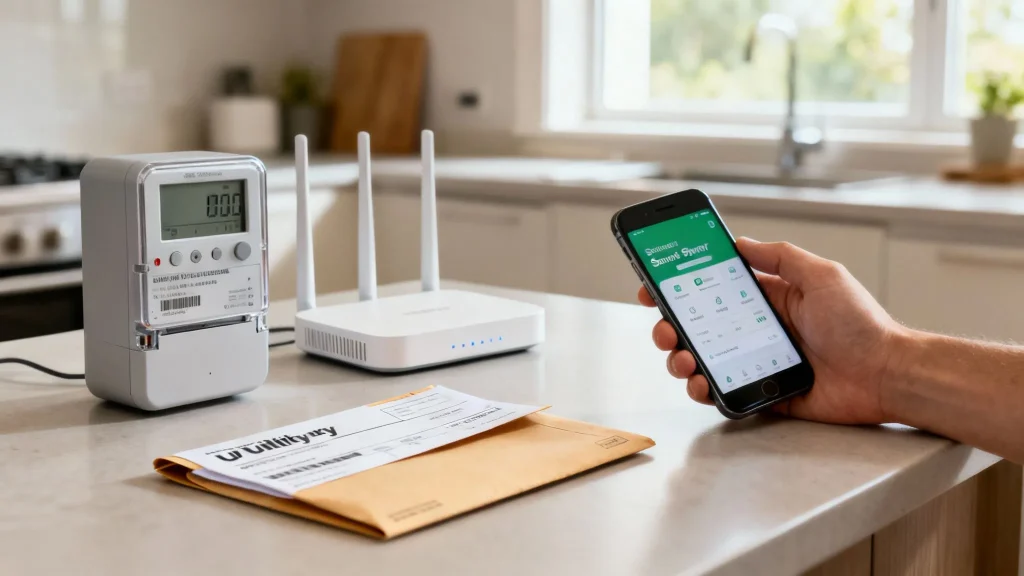
A vital part of any UK moving checklist is sorting out your home’s essential services. Unlike in some countries, utilities like gas, electricity, water, and broadband are typically managed directly by the resident, not the landlord. Arranging these connections in advance is critical to ensure you have heating, hot water, and internet access from the moment you move in, avoiding a stressful first few days in your new property.
How Utilities Work
When you move into a property, it will already be connected to gas, electricity, and water grids, but you must register an account in your name with a supplier. The existing supplier will place you on a standard variable tariff, which is often their most expensive plan. Your water provider is fixed based on your location (e.g., Thames Water in London), but for gas, electricity, and broadband, you have the freedom to choose your supplier and find a better deal. Costs vary by usage and region; a two-bedroom flat in London might have annual utility bills around £3,400, whereas a similar property in Manchester could be closer to £3,000.
Actionable Steps and Tips
To manage your utility connections effectively, aim to start this process two to four weeks before your move date:
- Find Your Suppliers: Ask the previous occupants, letting agent, or landlord who the current gas and electricity suppliers are. Your water company can be found using the Water UK postcode checker.
- Take Meter Readings: On your move-in day, locate your gas and electricity meters and take a reading. Photograph them as proof. Provide these readings to your new and old suppliers to ensure you are only billed for your actual usage.
- Use Comparison Sites: Do not stick with the inherited supplier’s expensive default tariff. Use comparison websites like Uswitch or MoneySuperMarket to compare deals from providers such as British Gas, E.ON, and Virgin Media to find the most cost-effective plans.
- Book Broadband Early: An internet connection can take several weeks to install, especially if a new line is needed. Book your installation with a provider like BT, Sky, or Hyperoptic well in advance to avoid being left without Wi-Fi.
- Inform Your Old Suppliers: Remember to provide your old suppliers with your final meter readings and a forwarding address so they can send you your final bill. This prevents any outstanding charges or credit issues.
3. Open a UK Bank Account and Set Up Direct Debits
A fundamental step for anyone moving to or within the UK is establishing a local bank account. This is not just a convenience; it is essential for receiving a salary, paying rent, and managing household bills. Without a UK bank account, navigating daily financial life becomes incredibly difficult, making this a high-priority item on your moving checklist.

How UK Banking and Direct Debits Work
Most major UK bills, including rent, council tax, utilities, and phone contracts, are paid via Direct Debit. This is an automated instruction you set up with your bank to allow a company to collect payments directly from your account on agreed dates. It ensures bills are paid on time and is the standard payment method expected by most service providers.
To open an account with a high-street bank like HSBC, Barclays, or NatWest, you typically need proof of identity (passport, visa) and proof of address (tenancy agreement, utility bill). The process can take one to two weeks, so it’s vital to start early. For newcomers, digital-first banks like Monzo or Starling can sometimes offer a faster, more streamlined application process.
Actionable Steps and Tips
Follow these steps to ensure a smooth transition into the UK’s financial system:
- Gather Your Documents: Before visiting a bank, have your passport, visa or Biometric Residence Permit, and a valid proof of address ready. A letter from your employer or university can also be a powerful supporting document.
- Compare Bank Accounts: Don’t just pick the first bank you see. Compare current accounts based on features, overdraft interest rates (which can vary from 0% to nearly 50%), and any new customer incentives, which often include cashback offers of £50 to £200.
- Set Up Key Direct Debits: Once your account is active, immediately arrange Direct Debits for your rent, council tax, and utilities. For example, a professional might automate payments totalling £1,555 per month (£1,200 rent, £180 council tax, £150 utilities, £25 phone).
- Track Your Payments: Set up calendar reminders for your Direct Debit dates to ensure you have sufficient funds in your account, helping you avoid costly overdraft fees.
- Go Paperless: Opt for online or ‘paperless’ statements to reduce clutter and make it easier to manage your financial documents digitally.
Setting up your financial foundation is crucial for settling in. For a more detailed walkthrough, explore this guide on UK banking for newcomers to understand the specific requirements and options available.
4. Book Accommodation Viewing and Conduct Property Inspections
A non-negotiable step on any UK moving checklist is conducting thorough property inspections before making a commitment. Whether you plan to rent or buy, a physical viewing is crucial to verify the property’s condition, assess its suitability for your needs, and identify potential red flags like damp or structural issues that online photos can easily hide.

How Property Viewings and Inspections Work
For rentals, viewings are typically arranged by letting agents like Foxtons or directly with landlords via platforms like SpareRoom. You can often book a slot within a few days of your initial enquiry. For purchases, a more formal and legally required process involves professional surveys conducted by RICS-certified surveyors to uncover hidden defects. A typical viewing lasts 30-45 minutes, and it’s common for movers to see 5-10 properties before deciding. For example, a student might view multiple house shares, documenting pre-existing damage in each to protect their deposit from a potential £500 claim later.
Properly documenting the property’s state at move-in is vital. This creates a baseline that protects your deposit when you eventually move out, ensuring you aren’t charged for pre-existing wear and tear.
Actionable Steps and Tips
To make the most of your property viewings, follow this structured approach:
- Document Everything: Take detailed photos and videos of every room, paying close attention to any existing damage like scuffs, stains, or cracks. This evidence is invaluable for protecting your deposit.
- Test Functionality: Don’t be afraid to test the essentials. Check the water pressure in the shower, flush the toilets, turn on the heating, and ask to see major appliances in operation.
- Vary Viewing Times: If possible, visit a property at different times of the day. This will give you a real sense of natural light, traffic noise, and the general neighbourhood atmosphere.
- Ask Key Questions: Enquire about the Council Tax band, average utility costs, and the property’s Energy Performance Certificate (EPC) rating. Understanding these ongoing expenses is crucial for accurate budgeting.
- Never Commit on the Spot: Avoid being pressured into signing an agreement during the viewing. Always take time to review your notes, compare your options, and carefully read any contracts before making a decision.
5. Update Address with HMRC, DWP, and Government Services
A critical administrative task on any UK moving checklist is officially updating your address with key government bodies. Failing to do so can lead to missed correspondence, incorrect tax calculations, interrupted benefit payments, or even legal compliance issues. Agencies like HMRC (for tax), DWP (for benefits), and the Home Office (for visas) must have your current address on file to function correctly.
Why This is a Priority
Government departments use your registered address for all official communication, from tax code notifications to benefit payment letters. For example, if HMRC sends important documents to your old address, you could end up on the wrong tax code, potentially costing you hundreds of pounds before it’s corrected. Similarly, someone receiving Universal Credit must inform the DWP immediately to ensure their payments continue without interruption. For visa holders, failing to notify the Home Office of a move is a breach of their visa conditions.
Updating these records promptly ensures you receive vital information, remain compliant with UK laws, and keep your financial affairs in order.
Actionable Steps and Tips
To manage this essential part of your move, follow this structured approach:
- Create a Master List: Before you start, list all the government bodies you need to contact. This typically includes HMRC, DWP (if applicable), the DVLA (for your driving licence), your local council (for the electoral roll), and the Home Office if you are on a visa.
- Prioritise HMRC and DWP: Update your address with HMRC via your Government Gateway account or by calling them. If you receive benefits, contact the DWP through your online journal or local Jobcentre Plus office. These are often the most time-sensitive.
- Update Your Driving Licence: You are legally required to update the address on your driving licence. This can be done for free on the gov.uk DVLA portal.
- Notify the Home Office (If Applicable): If you hold a visa or Biometric Residence Permit (BRP), you must report your new address using the relevant online form. Include your BRP number for quick processing.
- Keep Proof: Take screenshots or save confirmation emails from every online update you make. This documentation is invaluable if any disputes arise about when you provided your new details.
6. Arrange Contents Insurance and Renter’s Liability Insurance
An often-overlooked but vital step on any UK moving checklist is arranging the right insurance. While your landlord is responsible for insuring the building itself, you are responsible for protecting your personal belongings and covering any accidental damage you cause to their property. This financial safety net is crucial for peace of mind.
How Contents and Liability Insurance Work
Contents insurance protects your personal items like furniture, electronics, clothing, and jewellery from events such as theft, fire, and flood. Renter’s liability insurance (sometimes called tenant’s liability) specifically covers accidental damage to your landlord’s fixtures and fittings, such as carpets, kitchen units, or bathroom suites. Since you are legally required to pay for damages you cause, this protects you from potentially huge repair bills.
For example, a tenant in London with £15,000 worth of belongings might pay around £18 per month for contents cover and an extra £3 for liability insurance. This combined £252 annual cost protects them against losing their possessions and facing a five-figure bill for a mishap like a spilt bottle of red wine on a cream carpet.
Actionable Steps and Tips
To ensure you have adequate cover from the day you move in, follow these steps:
- Create an Inventory: Before getting quotes, list your major belongings and estimate their total value. This ensures you buy enough cover without overpaying. Photograph valuable items and keep receipts as proof for potential claims.
- Compare Quotes: Don’t accept the first offer. Use price comparison websites like MoneySuperMarket or GoCompare to get quotes from multiple providers such as Aviva, Direct Line, and Churchill.
- Declare High-Value Items: Be sure to declare specific high-risk items like expensive laptops, jewellery, or bicycles. Failing to do so can invalidate a future claim.
- Look for Bundles: If you have car or life insurance, ask your current provider about a multi-policy discount, which can often save you 10-15%.
- Understand Your Policy: Read the small print to understand your excess (the amount you pay towards a claim) and any specific exclusions. Ensure the policy starts on your move-in date.
7. Understand and Protect Your Tenancy Rights and Deposit
A vital step for any renter in a UK moving checklist is understanding your legal rights and ensuring your tenancy deposit is protected. UK law, primarily the Housing Act 1988, provides significant protections for tenants, especially regarding deposits and evictions. This is not just a formality; it is a critical safety net that safeguards your money and your home.
How Tenancy Rights and Deposit Protection Work
When you pay a tenancy deposit, your landlord or letting agent is legally required to place it into one of three government-authorised schemes within 30 days: the Deposit Protection Service (DPS), MyDeposits, or the Tenancy Deposit Scheme (TDS). This ensures your money is held securely and provides a free, impartial dispute resolution service if there are disagreements over deductions at the end of your tenancy.
The standard rental agreement is an Assured Shorthold Tenancy (AST), which outlines your rights and responsibilities. It also defines how your landlord can end the tenancy, typically using a Section 21 (‘no-fault’) or Section 8 (‘fault-based’) notice, both of which have strict legal requirements that must be followed.
Actionable Steps and Tips
To secure your rights from day one, follow these essential steps:
- Verify Deposit Protection: Within 30 days of paying, your landlord must provide you with ‘Prescribed Information’ detailing which scheme protects your deposit. You can use the scheme’s website to verify this independently.
- Document Everything: Take detailed photos and videos of the property’s condition on the day you move in. This is your primary evidence to dispute unfair damage claims later. For example, a Birmingham student who documented pre-existing scuffs successfully disputed a £200 deduction and recovered their funds via the DPS.
- Communicate in Writing: Keep a record of all communication with your landlord, especially repair requests. An email provides a clear audit trail if issues are not addressed.
- Know Eviction Rules: A landlord cannot simply ask you to leave. A Section 21 notice requires at least two months’ notice and cannot be served within the first four months of your tenancy.
- Seek Free Advice: Organisations like Shelter and Citizens Advice offer free, expert guidance on tenancy issues. Don’t hesitate to contact them if you are unsure about your landlord’s actions.
Understanding these protections is key to a secure and fair tenancy. You can learn more about upcoming changes by exploring the impact of the Renters’ Rights Bill and how it will further strengthen tenant protections.
8. Forward Mail and Redirect Post with Royal Mail
An often-overlooked yet critical task on any UK moving checklist is setting up a mail redirection service. This simple step ensures that any letters sent to your old address, from personal correspondence to official documents, are automatically forwarded to your new one. Neglecting this can lead to missed bills, penalty notices, and even identity theft if sensitive information falls into the wrong hands.
How Mail Redirection Works
The official Royal Mail Redirection service is a paid-for arrangement that instructs Royal Mail to send any post addressed to you at your old property to your new UK or overseas address. The service can be set up for 3, 6, or 12 months, with costs starting from around £36 for three months. It acts as a safety net, catching any mail from organisations you may have forgotten to update with your new details.
This service is vital for ensuring continuity. For example, a final utility bill, a tax refund from HMRC, or a hospital appointment letter sent to your old address will still reach you, preventing significant administrative headaches and potential financial loss.
Actionable Steps and Tips
To ensure a seamless transition for your post, follow these practical steps:
- Book in Advance: Set up your redirection at least one to two weeks before you move. The service takes a minimum of five working days to activate, so early booking is essential for it to be active from your moving day.
- Choose the Right Duration: For a temporary move, such as a student moving between accommodations, a six-month redirection may suffice. However, if you are moving permanently, a 12-month service is highly recommended to catch annual correspondence.
- Don’t Rely on It Exclusively: Redirection is a safety net, not a replacement for manually updating your address. Prioritise informing crucial organisations like your bank, employer, the DVLA, and HMRC yourself.
- Include All Names: Ensure you list every person in the household who needs their mail redirected. You can add multiple names to a single redirection application for a small additional fee per person.
- Test the Service: A week after you’ve moved, consider sending a letter to yourself at your old address to confirm the redirection is working correctly. You can set up your redirection easily on the Royal Mail website.
9. Calculate and Budget for Total Moving Costs and Hidden Expenses
One of the most critical steps in any UK moving checklist is to create a detailed budget that accounts not just for the obvious expenses, but also for the numerous hidden costs. Underestimating the total financial outlay can lead to significant stress. A comprehensive budget provides a clear financial roadmap, ensuring you are prepared for every expense from the deposit to the first week’s food shop.
How Moving Costs Work
Beyond the headline figure for a removal company, your total moving cost is a combination of fixed and variable expenses. Professional movers for a standard two-bedroom house can range from £2,000 to £5,000, while a DIY van rental might be closer to £300-£800. However, you must also factor in costs like the security deposit (legally capped at five weeks’ rent in England), the first month’s rent in advance, and initial setup costs for utilities, insurance, and essential household items. For a move to London, this could easily total over £7,000, whereas a similar move to Manchester might be closer to £3,000 due to lower rental costs.
Actionable Steps and Tips
To avoid financial surprises, a meticulous approach to budgeting is essential. Start planning at least two to three months before your move.
- Create a Detailed Spreadsheet: Separate your costs into ‘fixed’ (deposit, rent) and ‘variable’ (movers, new furniture). This helps you see where you can make savings.
- Get Multiple Removal Quotes: Always request quotes from at least three different removal companies. Compare their itemised charges, not just the final price, to understand what is included (e.g., packing materials, insurance).
- Factor in “Hidden” Expenses: Don’t forget smaller costs that add up: mail redirection (£36+), professional cleaning for your old property (£150-£300), and the initial big grocery shop (£100+).
- Plan for Your Deposit Return: Be aware that your old security deposit may take several weeks to be returned. Do not rely on this cash for your new moving expenses.
- Negotiate a Relocation Allowance: If moving for a job, ask your employer about a relocation package. Allowances of £2,000-£10,000 are common for professional roles and can cover a significant portion of your costs.
10. Research and Choose Accommodation by Location, Affordability, and Commute
Choosing where to live is one of the most significant decisions in any UK moving checklist, directly impacting your budget, lifestyle, and daily routine. UK housing costs vary dramatically by region, with a one-bedroom flat in London costing £1,600-£2,000 per month, compared to £600-£900 in Manchester. A thorough research phase is essential to find a home that balances affordability with your desired location and commute.
How Accommodation Research Works
This process involves establishing a realistic budget and then identifying locations that fit within it, while also meeting your non-negotiable criteria like commute time or proximity to schools. A common affordability benchmark in the UK suggests your rent should be around 25-30% of your gross monthly income. For example, someone earning £40,000 per year could reasonably afford rent of £1,000-£1,200 per month. This budget would likely limit them to Zones 2-3 in London but could secure a prime Zone 1 equivalent in a city like Birmingham or Edinburgh.
After setting a budget, you can use property portals like Rightmove and Zoopla to compare listings, filtering by price, location, and property type. It is crucial to look beyond just the rental price and consider the ‘all-in’ monthly cost, which includes Council Tax, utilities, and transport fares.
Actionable Steps and Tips
To find the right accommodation without stretching your finances, follow this framework:
- Establish a Realistic Budget: Calculate 30% of your gross salary as a maximum rental spend. This helps you narrow your search and avoid properties you cannot comfortably afford.
- Prioritise Your Commute: Aim for a journey time of 15-30 minutes if possible. Use tools like the TfL Journey Planner in London or Google Maps elsewhere to test commute times from potential neighbourhoods during peak hours.
- Research Neighbourhoods Thoroughly: Use Google Maps Street View for a virtual walk-around, check local council websites for crime statistics, and read neighbourhood guides on property portals.
- Compare ‘All-In’ Monthly Costs: Create a simple spreadsheet listing rent, estimated Council Tax (check the band), average utility bills, and your transport pass cost for each shortlisted property. This gives you a true comparison of affordability.
- Consider a House Share: If you are on a tight budget or new to a city, platforms like SpareRoom are invaluable. Sharing reduces costs significantly and can provide an instant social network.
- Join Local Online Communities: Search for neighbourhood-specific Facebook groups to get honest feedback from current residents about the area, including its pros and cons.
10-Item UK Moving Checklist Comparison
| Task | Implementation Complexity (🔄) | Resource Requirements & Cost (⚡) | Outcomes & Impact (⭐📊) | Ideal Use Cases & Tips (💡) |
|---|---|---|---|---|
| Register with Council Tax and Understand Your Banding | Moderate — register within 21 days; appeals process if band disputed 🔄 | Low admin; annual cost varies by band (typ. £1,200–£3,500) ⚡ | High effectiveness for budgeting and legal compliance ⭐⭐⭐ — ~10–15% of housing costs 📊 | New movers — register immediately; check band online; set direct debit; appeal if assessed incorrectly 💡 |
| Arrange Utility Connections (Gas, Electricity, Water, Internet) | High — multiple suppliers, regional differences, 2–4 week lead time 🔄 | Ongoing monthly costs (~£250–£350 household); setup time and possible exit fees ⚡ | Essential service availability; switching can reduce costs ⭐⭐ — represents 15–20% monthly living costs 📊 | Contact suppliers 2–3 weeks before move; take meter readings; use comparison sites and budget billing 💡 |
| Open a UK Bank Account and Set Up Direct Debits | Low–Moderate — documentation and processing (1–2 weeks) 🔄 | Minimal direct cost; requires ID and proof of address; potential overdraft risks ⚡ | Very high impact for salary, automated payments and discounts ⭐⭐⭐ — enables Direct Debit savings 📊 | Open before arrival if possible; compare overdrafts; set DDs and paperless statements; keep proof of address ready 💡 |
| Book Accommodation Viewing and Conduct Property Inspections | Moderate–High — time-consuming; professional surveys for purchases 🔄 | Time investment; surveys £300–£1,500; view 5–10 properties typical ⚡ | Very effective at avoiding costly repairs and disputes ⭐⭐⭐⭐ — can save thousands on purchase/repairs 📊 | View at different times, take 360° photos, get condition reports, never sign on the spot 💡 |
| Update Address with HMRC, DWP, and Government Services | Moderate — multiple portals and proof requirements; processing 7–14 days 🔄 | Time and documentation; mostly free; some postal forms for DVLA ⚡ | High importance for benefits, tax codes and immigration compliance ⭐⭐⭐ — avoids penalties/interrupted payments 📊 | Update HMRC first; keep confirmation screenshots; notify Home Office if visa holder; use checklist 💡 |
| Arrange Contents Insurance and Renter’s Liability Insurance | Low — fast online quotes and setup; waiting periods apply 🔄 | Low monthly premiums (£10–£25 contents; £2–£5 liability); excess applies ⚡ | Effective financial protection for belongings and liability ⭐⭐⭐ — mitigates £5k–£50k losses 📊 | Inventory items, photograph valuables, compare 3–5 insurers, bundle policies for discounts 💡 |
| Understand and Protect Your Tenancy Rights and Deposit | Moderate — legal requirements and dispute timelines; 30-day deposit protection 🔄 | Time to verify protection; possible legal advice costs; deposit typically 5 weeks’ rent ⚡ | Very high protection for renters (deposit return, eviction rights) ⭐⭐⭐⭐ — prevents unlawful eviction and unfair deductions 📊 | Verify deposit scheme, take condition photos within 7 days, keep repair request records, seek Shelter/Citizens Advice help 💡 |
| Forward Mail and Redirect Post with Royal Mail | Low — online setup in ~5 minutes; activation 5 working days 🔄 | One-off fee (£16.99–£42.99 depending on duration) ⚡ | Useful safety net to avoid missed correspondence ⭐⭐ — reduces risk of missed bills/addressed documents 📊 | Order ≥2 weeks before move, choose 12m/3y if uncertain, still update key providers manually 💡 |
| Calculate and Budget for Total Moving Costs and Hidden Expenses | Moderate — many variables and regional differences 🔄 | Potentially high upfront costs (£4,000–£12,000+); deposits, movers, temporary housing ⚡ | High value for cashflow planning and stress reduction ⭐⭐⭐ — prevents short-term financial shocks 📊 | Use itemized spreadsheet, obtain 3–4 quotes, factor deposit return delays, seek employer relocation allowances 💡 |
| Research and Choose Accommodation by Location, Affordability, and Commute | Moderate–High — 8–12 weeks typical research, market competition 🔄 | Time and access to portals; rent varies widely (London vs regions) ⚡ | Strong impact on monthly cost and quality of life ⭐⭐⭐ — location drives rent and commute costs 📊 | Aim for 25–30% salary on rent, prioritize commute (15–30 min), compare all-in costs and view properties in-person 💡 |
Bringing It All Together: Your Post-Move Action Plan
Successfully navigating a move to or within the UK is a monumental achievement. From the initial stages of budgeting and property viewings to the final push of unpacking, each step requires careful planning and execution. This comprehensive UK moving checklist was designed to be your roadmap, breaking down a complex process into manageable, actionable stages. By following it, you’ve not only transported your belongings but have also laid the essential administrative and financial groundwork for your new life.
The journey, however, doesn’t conclude the moment the keys are in your hand. The first few weeks in a new home are a critical transition period where you transform a new address into a genuine home. It’s about finalising the details that ensure you are a fully registered, protected, and connected resident.
Key Takeaways: From Planning to Settling In
Recapping our journey, the most crucial elements of a successful move revolve around proactive administration and financial diligence. Remember these core principles as you complete your transition:
- Financial Foresight is Non-Negotiable: Your budget is the bedrock of your move. Accurately calculating everything from the tenancy deposit and first month’s rent to the often-overlooked costs of new furniture, utility connection fees, and council tax is paramount.
- Administrative Diligence Secures Your Foundation: Tasks like registering for Council Tax, opening a UK bank account, and updating your address with HMRC are not just suggestions; they are vital for legal and financial stability. Neglecting these can lead to fines or service disruptions.
- Protect Your Assets and Rights: Arranging contents insurance and understanding your tenancy agreement are your primary lines of defence. These steps protect your possessions and ensure you are treated fairly as a tenant, safeguarding your deposit and peace of mind.
Your Final Post-Move Checklist
With the major hurdles cleared, it’s time to tick off the final, yet equally important, items that will cement your place in your new community. This is your immediate action plan for the first month:
- Register with a Local GP and Dentist: Don’t wait for an emergency. Research local NHS surgeries and dental practices in your area and complete the registration process as soon as you move in. Your health is a priority.
- Sort Out Your TV Licence: If you watch or record live TV on any channel, or watch content on BBC iPlayer, you are legally required to have a TV Licence. This applies to any device, including TVs, laptops, and tablets. You can set this up online quickly.
- Confirm All Address Updates: Double-check that all critical institutions have your new address. This includes your bank, employer, pension provider, DVLA (for your driving licence and vehicle registration), and any subscription services. A missed letter can cause significant issues.
- Explore Your New Neighbourhood: Beyond the paperwork, truly settling in means connecting with your environment. Locate your nearest supermarkets, post office, pharmacy, and public transport links. Take a walk and discover the local parks, cafes, and community centres.
By systematically addressing every item on this UK moving checklist, you have built a strong foundation for your future. You have moved beyond the logistics of boxes and vans and into the realm of creating a stable, secure, and enjoyable life in your new home. The effort you invest now in these final administrative steps will pay dividends for years to come, offering peace of mind and allowing you to fully embrace your new surroundings.
Ready to take control of your finances in your new home? For detailed, localised cost-of-living data and powerful budgeting tools tailored to UK life, visit UK Life Costs. Our platform helps you go beyond the move and master your budget with precision. Explore UK Life Costs to start planning your financial future today.