
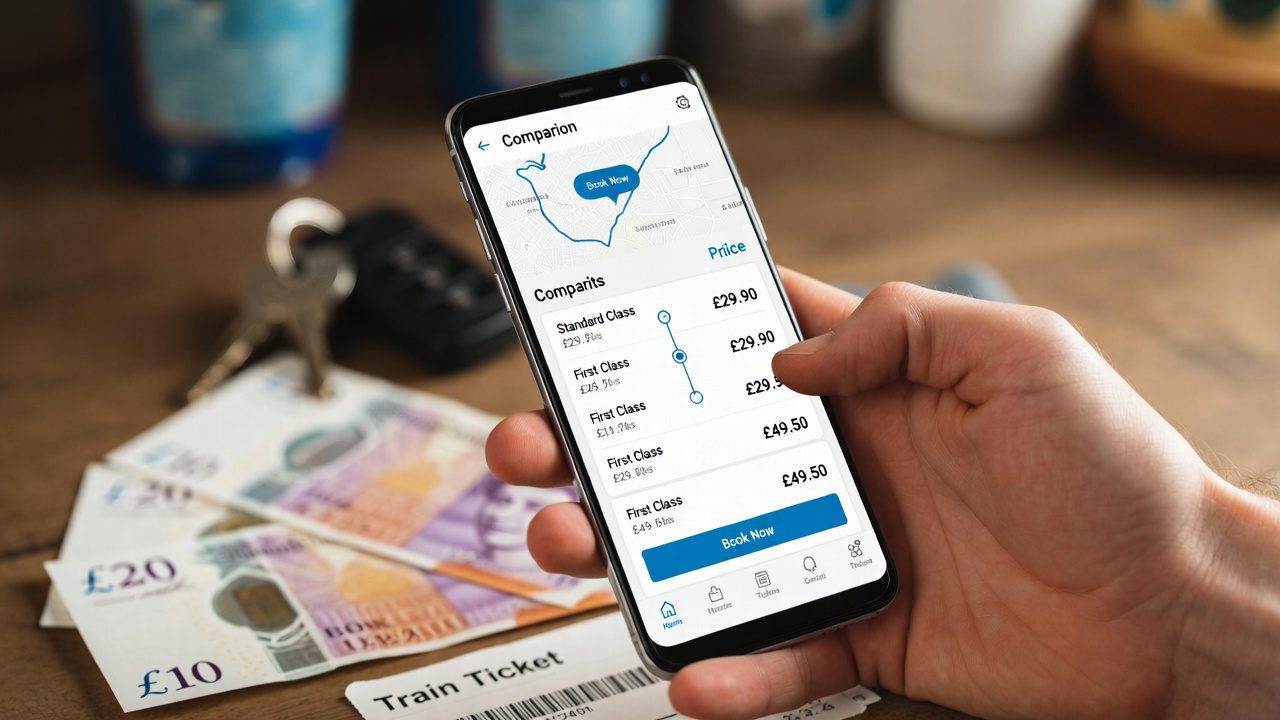
Moving to the UK brings many questions, but none is more frequent than: Is it cheaper to drive or take the train UK style? With the 2026 “Rail Fare Freeze” and expanding Clean Air Zones (CAZ), the answer isn’t as simple as it used to be.
Whether you’re commuting from Featherstone to Leeds or living in a major city, transport is likely your second biggest expense. Transport is a major factor in your monthly cost of living in the UK, often trailing just behind your rent or mortgage. Let’s break down the 2026 costs to see which option keeps more money in your pocket.
1. The Rail Strategy: Is it Cheaper to Take the Train?
The government’s decision to freeze regulated rail fares in 2026 has made trains more competitive. However, the real secret to answering “is it cheaper to take the train?” lies in Split Ticketing.
- Split Ticketing 2026: Instead of buying a direct ticket from A to C, you buy tickets for segments (A to B, then B to C). You stay on the same seat, but the price drops by up to 40%.
- Digital Railcards: If you are 26-30 or a frequent traveler, a digital railcard is mandatory. It slashes another 1/3 off your fare.
Rank Math Tip: Advance tickets (booked 3+ days early) are still the gold standard for saving money on UK rail travel.
2. The Road Reality: Is it Cheaper to Drive in 2026?
Many people think driving is always the winner, but they often forget the “Hidden City Taxes.” If you are considering buying a used car in the UK, you must calculate these daily fees.
- Clean Air Zones (CAZ): In 2026, cities like Manchester, Birmingham, and Bristol charge non-compliant cars £8-£12 per day.
- Parking Fees: City center parking in Leeds or London can easily reach £15-£20 per day. When you add this to fuel and insurance, the “cheap” car starts to look very expensive.
3. 2026 Comparison Table: Real Commuting Costs
To truly answer is it cheaper to drive or take the train UK, we need to look at a typical 25-mile daily return journey (e.g., Featherstone to Leeds).
| Cost Item (Monthly) | Train (with Railcard) | Petrol Car (Non-Compliant) | Electric Car (Home Charge) |
| Travel/Fuel | £145 (Season Ticket) | £125 (Fuel) | £42 (Electricity) |
| Daily Charges | £0 | £200 (CAZ/ULEZ) | £0 |
| Parking | £0 | £180 (£9/day) | £180 (£9/day) |
| TOTAL | £145 | £505 | £222 |
You can officially check your vehicle’s emission standards on GOV.UK to see if you’ll be charged for entering city centers like London or Birmingham.
4. The Electric Vehicle (EV) Factor
If you have a driveway and can charge at home, the EV is the clear financial winner for 2026. However, if you rely on public rapid chargers, your cost per mile is now nearly identical to a modern diesel car. Before switching, factor in how this affects your overall cost of living in the UK.
5. Final Verdict: Which is Cheaper?
So, is it cheaper to drive or take the train UK?
- The Train Wins: If you work in a city center (London, Leeds, Birmingham) where parking is expensive and CAZ charges apply.
- The Car Wins: If you commute between suburbs where public transport requires multiple bus/train changes, or if you travel as a family (group travel is always cheaper by car).